
What are Incoterms? Understand costs and risk, all eleven Incoterms 2020 terms, and how to write a delivery term in an export quotation.
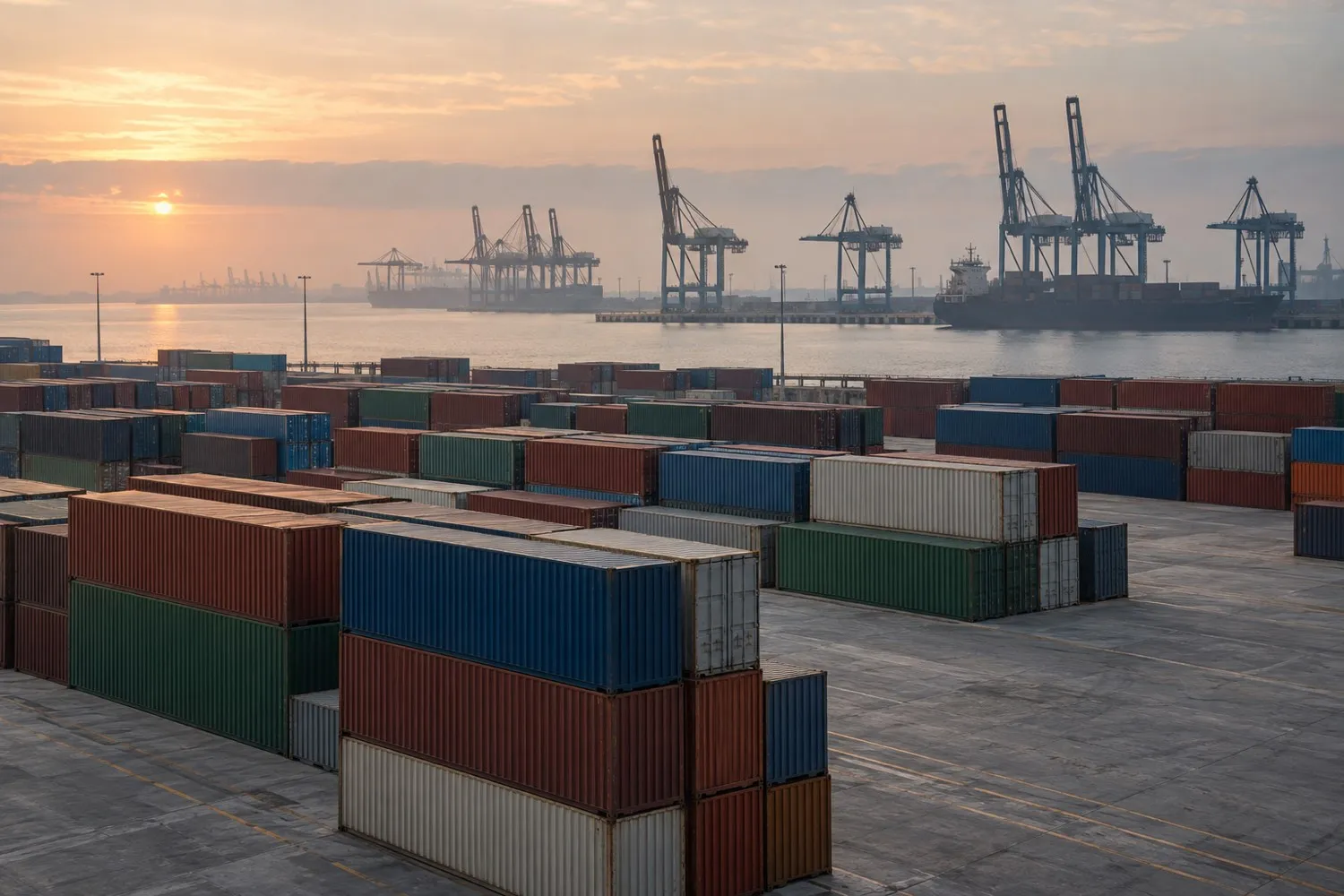
A quotation arrives with FOB Surabaya or CIF Rotterdam beside the price. Those three letters look straightforward, but they do not tell you when the goods become yours or when payment falls due. Both points still need to be agreed separately in the sale contract, even when the delivery term has already been chosen.
So, what are Incoterms? They are standard rules published by the International Chamber of Commerce (ICC) to allocate costs, risks and responsibilities between sellers and buyers. The current edition is Incoterms 2020. These rules apply because the parties incorporate them into their contract. They are not national legislation or a complete sale agreement.
Understanding an Incoterm helps you read a quotation before accepting it. Start with what the rules cover, then explore the eleven terms by transport mode. The aim is to know which questions to ask.
What Incoterms cover, and what they leave out
Delivery terms divide the work of moving goods. Costs and risk may transfer at different places. A seller can pay transport to destination while the buyer bears risk from an earlier point. Read these obligations separately.
- Covered: allocation of costs, delivery and transfer of risk, arrangements for carriage, and insurance obligations under particular terms.
- Covered: allocation of responsibility for export and import formalities and the documents each party must provide.
- Not covered: transfer of ownership, the transaction price, payment methods or payment dates.
- Not covered: remedies for breach and dispute resolution; these matters need suitable provisions in the sale contract.
Allocating responsibility for paperwork does not remove the requirements that apply to the goods or destination. Once you know who handles the formalities, establish which documents the shipment needs. The guide to documents before your first export provides a starting point for that discussion.
Eleven terms in two groups
The full Incoterms 2020 list contains seven terms for any mode of transport and four for sea and inland waterway transport only. The distinction follows how the goods are delivered within the transport chain. It is not a ranking of who pays more. A journey involving a ship does not automatically require a sea-only term.
For each term, ask where delivery occurs, where risk transfers and who arranges onward transport. Then check costs. A city name may not identify whether delivery is at a warehouse, depot, terminal or on board.
Seven terms for any mode of transport
The following sequence moves broadly from the seller's lightest responsibilities under EXW to the heaviest under DDP. It is a useful memory aid, rather than a risk scale that rises at every step. Under CPT and CIP in particular, paying carriage to destination does not mean bearing risk all the way there.
- EXW (Ex Works): the seller makes the goods available at the named place, without an obligation to load the collecting vehicle or arrange export clearance.
- FCA (Free Carrier): the seller clears the goods for export and delivers them to the buyer's nominated carrier or other person at the agreed place, where risk transfers.
- CPT (Carriage Paid To): the seller pays carriage to the named destination, but risk transfers when the goods are handed to the carrier at the agreed delivery point.
- CIP (Carriage and Insurance Paid To): the seller pays carriage and insurance to the named destination, while risk transfers upon handover to the carrier at the agreed point.
- DAP (Delivered at Place): the seller bears costs and risk to the named destination, making the goods available on the arriving vehicle ready for unloading, with import clearance handled by the buyer.
- DPU (Delivered at Place Unloaded): the seller bears costs and risk until the goods have been unloaded at the named destination, while the buyer handles import clearance.
- DDP (Delivered Duty Paid): the seller bears costs and risk and handles export and import clearance, including relevant duties, until the goods are available at destination, ready for the buyer to unload.
For FCA, clarify whether delivery occurs at the seller's premises or elsewhere. The location affects the loading arrangements that need to be made. For DPU, check that unloading at destination can actually be arranged. Short definitions help narrow the options, but the precise place still shapes the work involved.
Four terms for sea and inland waterway transport only
- FAS (Free Alongside Ship): the seller clears the goods for export and delivers them alongside the buyer's nominated vessel at the port of shipment, where risk transfers.
- FOB (Free on Board): the seller clears the goods for export and delivers them on board the buyer's nominated vessel at the port of shipment, where risk transfers.
- CFR (Cost and Freight): the seller pays freight to the destination port, but risk transfers once the goods are on board the vessel at the port of shipment.
- CIF (Cost Insurance and Freight): the seller pays freight and insurance to the destination port, but risk transfers once the goods are on board at the port of shipment.
These terms suit deliveries that actually occur alongside or on board a vessel. They are often unsuitable for containers handed to a carrier at an inland depot. Consider the any-mode group when your delivery point comes before vessel loading. An in-depth discussion of FOB versus CIF is available here once you understand the basic terms.
What changed in Incoterms 2020
DAT, or Delivered at Terminal in the previous edition, became DPU. The name Delivered at Place Unloaded makes clear that the destination need not be a terminal. Another place can be agreed, while delivery after unloading remains a defining responsibility of the seller.
CIP now requires a higher level of insurance under Institute Cargo Clauses (A) or similar clauses. CIF retains Institute Cargo Clauses (C) as its default, with the option to agree higher protection. Check the policy against the goods and route; arranging insurance does not mean that every possible event is covered.
FCA was also adjusted to accommodate bill of lading requirements for sea carriage. The parties can agree arrangements for the carrier to issue a bill with an on-board notation. This documentary adjustment does not turn FCA into delivery on board the vessel. See ICC's explanation of the Incoterms 2020 changes for the source guidance.
Which terms are realistic for Indonesian exporters
In commodity trading, discussions tend to settle on a few terms that match the movement of goods and each party's capabilities. A new exporter might consider FCA when handing goods to a carrier inland. CPT or CIP can be discussed when the seller can arrange onward carriage, provided the risk transfer point is clear from the outset.
DDP requires the seller to understand and arrange import formalities in the destination country. This is why the term with the heaviest seller responsibilities is rarely a practical starting choice for a new exporter. Before accepting such a request, establish who can carry out those formalities and how the associated costs will be handled.
Packaging and loading plans also matter because transport costs depend on the space and weight used. The guide to working out a container load helps prepare the initial information. Choose a term that reflects work the parties can actually perform, rather than an abbreviation the buyer happens to recognise.
How to write the term in quotations and contracts
Write the term, a precise place and the rules edition together. A useful format is: FCA [name and address of delivery place], Incoterms 2020. Replace the bracketed wording with the agreed details. Where a term distinguishes delivery from the paid transport destination, identify both locations within the contract.
IDB places the delivery term at the top of every quotation so that the scope of different offers can be compared fairly. The IDB ordering process explains how an agreement is prepared. Record specifications, payment, transfer of ownership and arrangements for non-conforming goods separately, so the abbreviation is not expected to cover matters outside its scope.
For a closer look at two sea terms that often appear in trade discussions, continue with the FOB versus CIF article. Use this list to recognise the limits of each responsibility, then match the choice to the delivery point and the parties' ability to carry out the work.
Send the goods description, specifications, estimated volume and destination country to discuss exports with IDB. As a trading company, IDB can discuss a suitable delivery term based on those requirements, then set out the scope of work in a quotation for you to review.