
For container buyers of Indonesian cloves: the decisions to settle before signing, from the reference specification and sample to loading checks, delivery terms and payment.
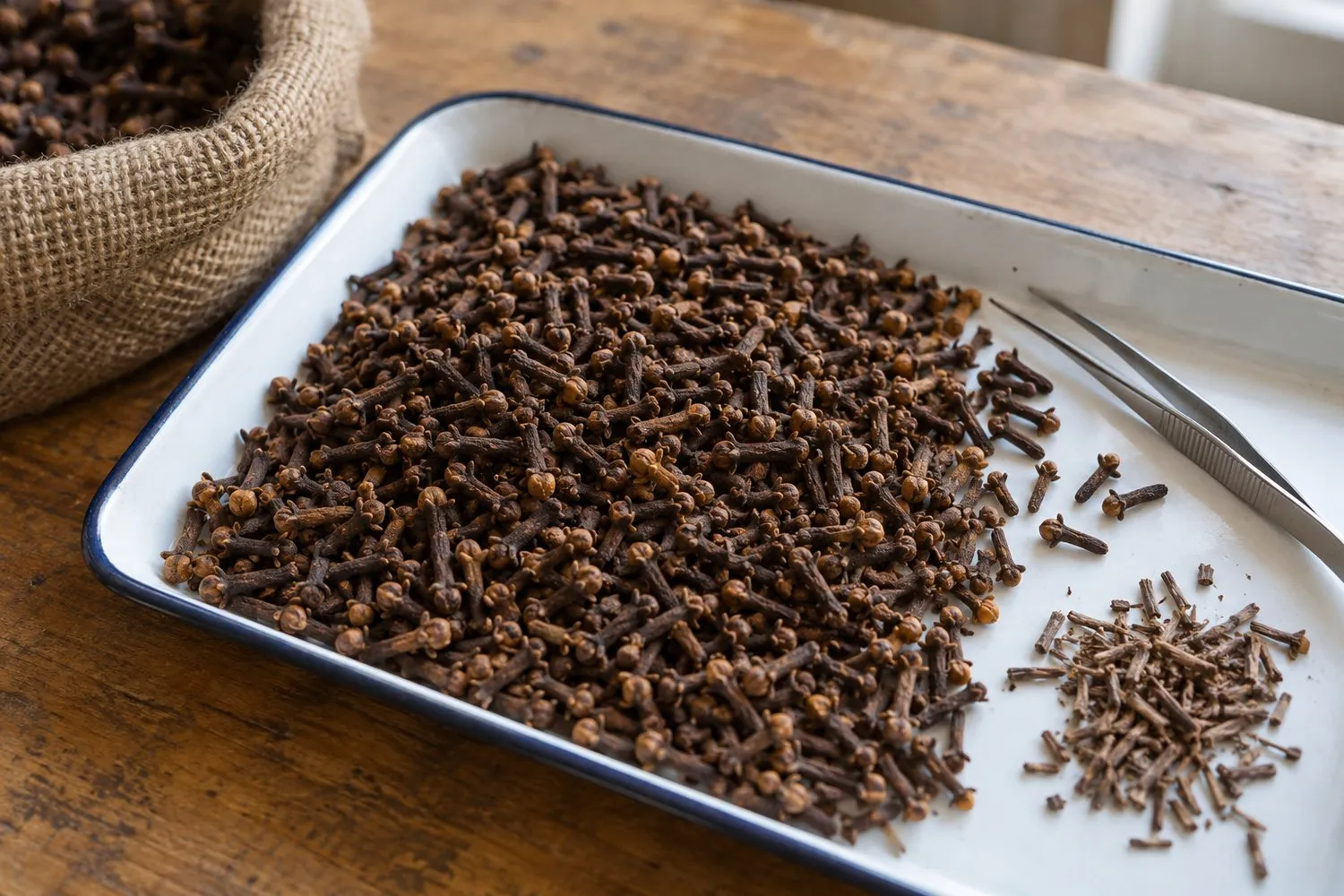
Buying cloves wholesale from Indonesia usually goes well when a few decisions are settled before the contract is signed: what the cloves are for, which specification the offer is written against, which sample the bulk has to match, how moisture and weight are checked at loading, and what happens if the cargo arrives outside the agreement. Price matters, but it only means something once those points are fixed.
This guide is for importers, spice traders and processors buying by the tonne or by the container. If you are still deciding what information to put in a first enquiry, our article on preparing a dried-clove enquiry covers that step. Here we pick up after the first replies arrive, when you are choosing between offers and getting ready to commit.
Start from what your customers do with the cloves
Two buyers can both ask for Indonesian cloves and need quite different goods. A trader repacking whole cloves for retail brands will look closely at appearance, uniformity and how many broken heads and stems end up in the bag. A buyer who grinds the cloves may care less about looks and more about cleanliness and consistency from one shipment to the next. A processor working with clove extracts may have its own quality tests altogether.
Say which of these you are before you compare offers. A supplier that knows the end use can propose a lot that fits it, and you avoid the common trap of comparing a cheap offer for one kind of goods with a dearer offer for another. If you already buy cloves from another origin, share your current purchasing standard and ask where an Indonesian lot would differ.
Use the reference specification as a starting point
IDB's clove page lists reference figures for dried cloves from Sulawesi and Maluku: moisture 12% max, stems 5% max, packed in 50 kg bags, with roughly 16 tonnes in a 20ft container. These are reference numbers, not a fixed grade. Current availability and the grade on offer are confirmed per enquiry.
Moisture is the figure to take most seriously. Above 12%, cloves can grow mould during the voyage, which is why IDB tests moisture before loading and records the result on the shipping documents. If your market or your own quality team needs a tighter limit, or limits on other parameters, write them into the request now. Anything not in the agreed specification is hard to raise later.
Treat the 16 tonne figure in the same way. It is a planning estimate based on reference packing, useful for budgeting and for comparing offers on a like-for-like basis. The actual bag count and net weight for your container are confirmed in the quotation.
Make sure the sample and the bulk are the same goods
A sample before contract is normal for cloves, and it is worth asking a simple question when it arrives: what does this sample represent? It might come from the lot being offered for your container, or it might show the type of goods the supplier can source. Both are useful, but they support different decisions, and the answer should be written down with the sample reference.
Have your quality team assess the sample against your written specification rather than a general impression. Record the outcome as accepted, rejected, or accepted with stated changes. If the offer later changes origin, lot or drying, ask whether the approved sample still applies before you go ahead. Agreeing early whether you also want a pre-shipment sample saves an awkward conversation close to loading.
Agree how moisture and weight are checked at loading
Two questions tend to come up once a spice shipment arrives: was the moisture right when the goods left, and did the full quantity arrive? Both are easier to answer if the method is agreed before signing. Decide who checks moisture, at what point before loading, and how the result is recorded. If you want an independent inspection, say so in the contract, along with who appoints and pays for it.
- The moisture limit and the point at which it is tested.
- Stem and foreign matter limits, and how they are assessed.
- Bag size, bag count and net weight per bag.
- Shipping marks and any packing or liner requirement.
- The records you receive before departure, such as loading photographs and container and seal numbers.
Weight deserves the same attention. Moisture content can change over a long voyage, so agree how net weight is measured at loading and how a difference at destination will be handled. A clear method on both sides is worth more than a strong promise from either.
Compare offers on the same delivery basis
An offer for goods loaded on a vessel in Indonesia and an offer that includes sea freight to your port are not the same price, even if the figures look close. Ask every supplier to quote on the same delivery term and named port, and confirm in writing who pays for freight, insurance and destination handling. IDB quotes one price to the agreed delivery point rather than a list of separate handling charges, which keeps the comparison simple.
Check the validity period of each offer as well. Commodity prices move, so an offer from last month is not a standing commitment for a new order. If your decision takes time, ask for the validity to be stated and plan your internal approval around it.
Put remedies and payment into the contract
A sales contract for cloves should record the grade, quantity, shipment window and what happens if the cargo misses the specification. Agreeing the remedy in advance, whether a price adjustment, replacement or another solution, turns a possible dispute into a procedure both sides already accepted. Note the evidence needed to raise a claim and the time allowed for it after arrival.
Payment terms are agreed at the same stage, typically an advance payment or a letter of credit, depending on the relationship and the size of the order. Whatever you choose, link each payment step to something you can verify, such as an approved sample, a loading report or the shipping documents. If this is your first purchase from a supplier, our guide on choosing an Indonesian commodity supplier covers the checks worth doing before the first transfer.
Ask about destination requirements early
Requirements for spices differ by country and sometimes by buyer. Ask your customs broker or the relevant authority what documents and checks apply to cloves at your port, then share that list with the supplier and ask which documents it can provide and when. IDB arranges export documents such as the certificate of origin and phytosanitary certificate before the goods move. Sorting this out before contract avoids discovering a missing document after the container has sailed.
IDB can help you source dried cloves from Sulawesi and Maluku and prepare a container order, from agreeing the specification and sample to packing, export documents and loading. Send your required specification, estimated volume, destination port and target shipment month through the IDB enquiry form, and mention whether you need a sample first. The trade team will come back to you with a suitable lot and the next steps for your order.