
For carrageenan processors and seaweed traders buying dried cottonii by the container: what the trade name covers, the moisture and sand figures that set the price, approving a sample, and why bales fill a container by space.
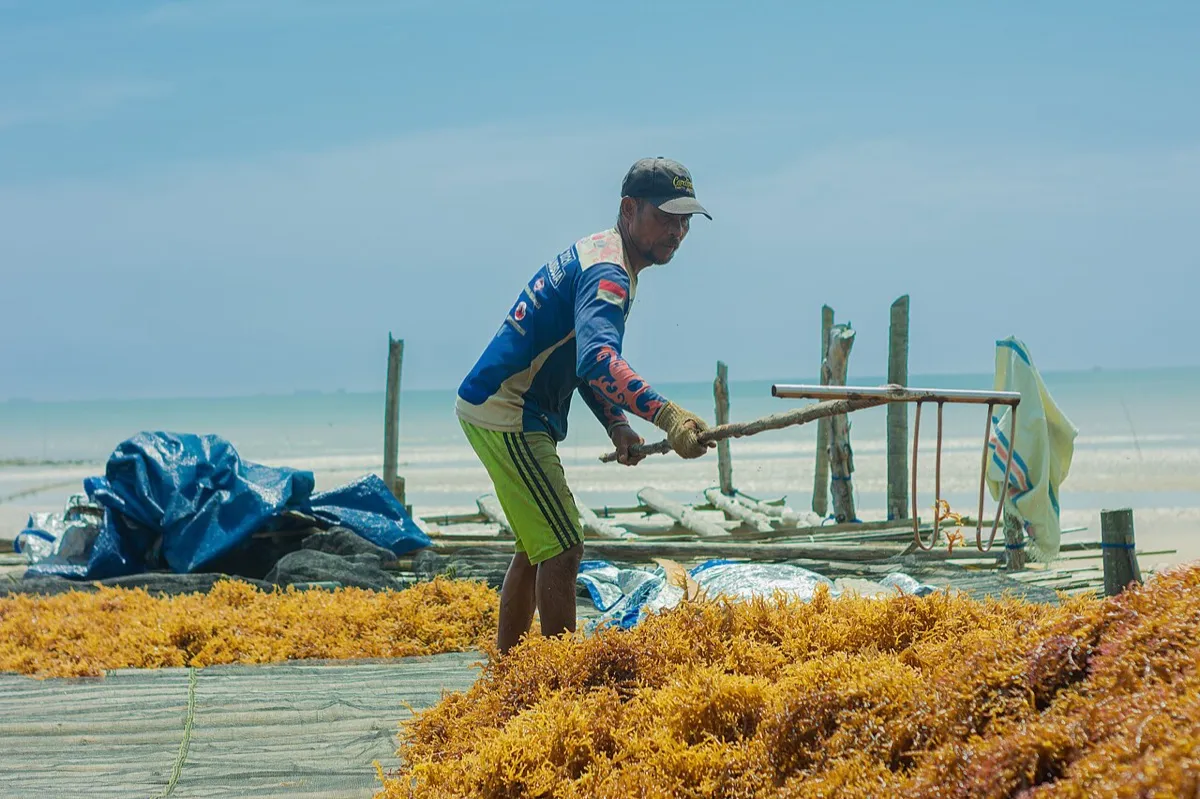
If you buy dried Eucheuma cottonii from Indonesia by the container, two numbers will shape almost every conversation: moisture and foreign matter, mostly sand and salt. Agree how both are measured, approve a sample against them, and plan the load by volume rather than weight. Most first-order problems with cottonii trace back to one of those three points.
This guide is written for carrageenan processors, hydrocolloid manufacturers and the traders who supply them. It follows the order a first purchase usually takes: what you are actually buying, the specification, the sample, packing and loading, then terms and the check before the container is sealed.
What the trade calls cottonii
Eucheuma cottonii is the name the seaweed trade still uses for a farmed red seaweed that botanists now classify as Kappaphycus alvarezii. You will see both names on offers and laboratory reports, and they refer to the same raw material. Its value lies in the kappa carrageenan it yields, which is why most of it ends up with processors making gelling and thickening agents for food and industry.
It is worth separating it early from spinosum, the other farmed Eucheuma, which is traded for iota carrageenan. The two are sometimes grown in the same coastal areas and can look alike to a non-specialist once dried. If your plant runs a kappa process, say so in your first message and ask that the offer names the species. A mixed lot is a costly thing to discover at the extraction stage.
In Indonesia, cottonii is farmed in shallow coastal water and sun-dried close to the farms, often on nets or raised platforms. IDB sources it from Sulawesi and Nusa Tenggara.
Moisture and sand set the price
Dried seaweed is not dried to the point of crispness. It still carries a fair share of water, and that water is weight you pay for. On IDB's specification the ceiling is 35 per cent moisture. Two offers at the same price per tonne are not the same deal if one is measured at a lower moisture than the other, so always compare offers on the moisture figure stated alongside the price.
The second figure is foreign matter. Seaweed dried on a beach picks up sand, salt crystals, small stones, bits of rope and other plants. For a processor this is not a cosmetic issue. Sand wears equipment and lowers the usable yield, and cargo with high sand content gets rejected. For that reason IDB sorts and cleans the seaweed of salt and sand before it is baled, not after, because once it is pressed into a bale the dirt is locked inside.
When you write your specification, keep it to the points your plant actually tests:
- Species, named on the offer, so cottonii is not mixed with spinosum.
- Maximum moisture and the method used to measure it.
- Maximum foreign matter, with a note on what counts: sand, salt, stones, rope, other seaweed.
- Any yield or gel-strength test your quality team runs, with the method, if you buy against it.
- Colour or condition requirements, if your process cares about them.
If you already buy cottonii from another origin, send your current purchasing specification. Matching an existing standard is easier than building one over email, and it gives both sides the same yardstick from day one.
Approve a sample that stands for your lot
A sample is only useful if everyone knows what it represents. When it arrives, ask whether it was drawn from the lot proposed for your container or is a general example of what can be sourced. Both are useful, but they support different decisions. Write the answer down with the sample reference.
Have the people who run the extraction look at it, not only purchasing. If your plant tests yield or gel strength, run that test on the sample and keep the result. Then reply with a plain decision: accepted, rejected, or accepted with stated changes. That decision becomes the reference the shipment is checked against later.
If the source area or the lot changes after you approve, ask whether the approved sample still applies before the goods are packed. Seaweed from different farms and drying conditions can vary, and a short question at this point saves a long one after arrival.
Bales, and a container that fills by space
For export, dried cottonii ships pressed into bales. IDB packs it in 100 kilogram bales, and a 20ft container takes around seven tonnes. That is far below what the box could carry by weight, because dried seaweed is bulky even when pressed. Like kapok and coconut fibre, it runs out of room before it reaches the weight limit.
Two practical points follow. How tightly the bales are pressed has a direct effect on your landed cost per kilogram, so ask for the bale size and an estimated load per container before comparing offers. And if your volumes allow it, ask for the load in a 40ft high cube as well, since the freight does not rise in step with the extra space. The note on working out a container load shows how volume and weight trade off for bulky cargo.
Moisture matters here too. Bales packed too wet can heat and develop mould on a long voyage inside a closed container, which is another reason the moisture ceiling sits in the contract and not only on the offer.
Terms, documents and payment
Ask for every offer on a named Incoterm. IDB quotes FOB, CFR or CIF from Indonesian ports and puts the Incoterm on the first line, which makes competing quotes comparable. If this is your first purchase from Indonesia, FOB keeps the split of responsibilities simplest.
A phytosanitary certificate and a certificate of origin come as standard on agricultural cargo. If your market or your own quality system needs a laboratory result for moisture or other parameters, say so before contract so it can be arranged before shipment. Your customs broker should confirm what your country requires at the border; adding a document before loading is easy, after sailing it rarely is.
Payment is usually an advance or a letter of credit. The sales contract records the species, specification, quantity, schedule and what happens if the cargo arrives outside the agreed figures. The general sequence is set out on how to order.
The check before loading
The cheapest moment to catch a problem is before the bales go into the container. IDB checks quality before stuffing, seals the container with the inspector present, and sends loading photographs, a quality report and the container and seal numbers. Read that report against your approved sample and specification, and raise anything unclear before the vessel leaves.
After the first shipment has been received and processed, note what worked: the moisture on arrival, how much cleaning your line still had to do, and the yield you got. That record turns the next order into a repeat rather than a fresh negotiation.
Planning a cottonii order with IDB
IDB can help you source dried Eucheuma cottonii from Sulawesi and Nusa Tenggara and set up a container order, from agreeing the specification and sample to baling, export documents and loading. Send the species and grade you need, your moisture and foreign matter limits, any test your plant runs, estimated volume and destination port through the IDB enquiry form. The full product details are on our seaweed page, and the trade team will come back with a suitable lot and the next steps for your order.