
For importers and manufacturers buying coconut oil by the drum or flexitank: how RBD and virgin grades differ, which one suits your process, and what to put in the specification.
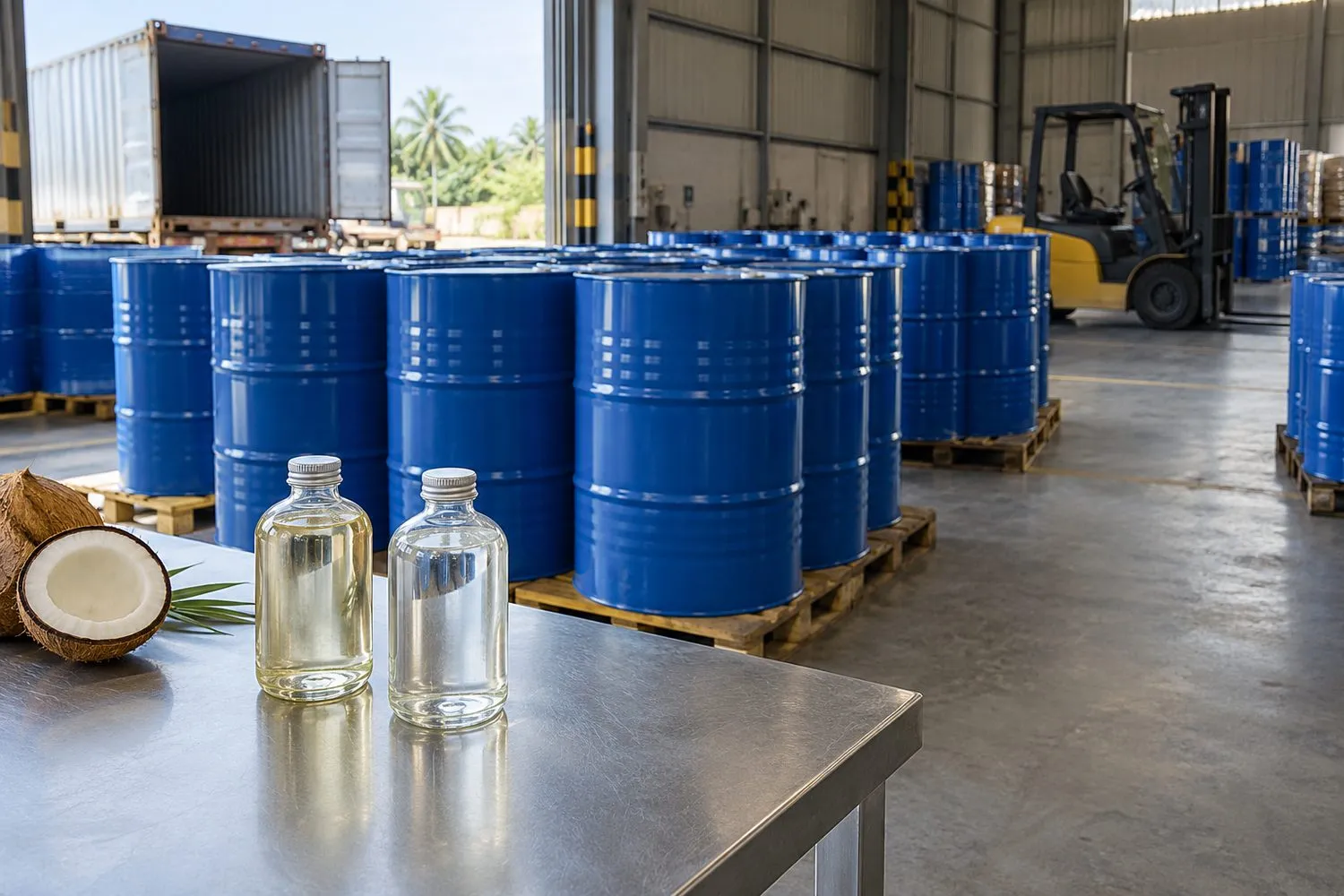
If you are buying coconut oil by the tonne, the first decision is not the price. It is the grade. RBD coconut oil and virgin coconut oil come from the same fruit, but they are made differently, handled differently and bought for different reasons. Ordering the wrong one for your process is an expensive mistake that no discount fixes.
The short answer: RBD is the workhorse oil for industrial users who need a neutral, consistent fat. Virgin coconut oil is bought when the coconut character itself is part of the product. The rest of this guide is for importers, distributors and manufacturers ordering in drums or flexitanks, and it covers how to choose, what to specify and how the order is usually shipped.
What actually separates the two grades
RBD stands for refined, bleached and deodorised. The oil is extracted from copra, the dried coconut meat, and then refined to remove free fatty acids, colour and odour. What arrives at your plant is a clear, almost tasteless oil that behaves the same from one shipment to the next. That predictability is the whole point.
Virgin coconut oil is pressed from fresh coconut meat and is not put through that refining step. It keeps the light coconut aroma and flavour, and it is usually sold on that basis. Because it starts from fresh coconuts rather than stored copra, the production chain is shorter and more sensitive, and buyers tend to order it in smaller volumes than RBD.
Neither grade is better in general. They answer different questions. A food manufacturer frying snacks wants an oil that adds nothing to the taste. A brand selling a coconut product wants the opposite.
Match the grade to your process, not the label
The easiest way to choose is to describe what the oil will do once it reaches you. A few common cases:
- Frying, baking fats, confectionery coatings and other food manufacturing where taste and colour must stay neutral: RBD is the usual choice.
- Cosmetic and personal care formulations that need a clean, odourless base oil: RBD, often with tighter limits on colour and odour agreed in the contract.
- Products where coconut flavour or aroma is part of the selling point, such as some food, beverage and specialty care lines: virgin coconut oil.
- Repacking for distributors who sell to both groups: two separate specifications, quoted and shipped as separate lots.
If you already buy coconut oil from another origin, send your current purchasing specification with the enquiry. It is the quickest way for a supplier to tell you whether an Indonesian lot matches it, and where it might differ.
What to write into the specification
For bulk coconut oil, the specification is the document that settles arguments later. IDB's coconut oil page lists reference details: oil from Sulawesi and Sumatra in RBD and virgin grades, packed in 200 kg drums or flexitank, with a melting point of 24 to 26 °C and around 18 tonnes in a 20ft container. These are reference figures. The grade on offer and the actual load are confirmed in each quotation.
Beyond that, the parameters depend on your use and your market. Buyers of RBD commonly set limits for free fatty acid, moisture, colour, odour and taste. Buyers of virgin oil often add requirements about how the oil was produced. Some markets and customers also ask for laboratory analysis or certificates with each lot. Whatever applies to you, write it down before pricing starts, because a parameter that is not in the agreed specification is hard to raise once the oil has been loaded.
Ask as well how quality is checked before loading and what record you receive. A sample approved against your written specification, and a loading report that refers back to it, give both sides the same reference point.
Drums or flexitank: the packing decision
Packing changes the cost and the work at your end, so decide it alongside the grade. Drums are easier to receive. They can be unloaded with a forklift, stored in a warehouse and used a few at a time, which suits smaller plants, mixed orders and buyers who repack.
A flexitank is a large single-use bladder fitted inside a container, and it is more economical when you buy at volume. The catch is at the destination. Discharging a flexitank needs proper facilities, usually pumping into a tank, so confirm that your terminal or plant can handle it before you choose this option. If it cannot, the savings disappear quickly.
Temperature matters with both. Coconut oil melts at around 24 to 26 °C, which means it will often be solid on arrival in a cool climate. Plan how the oil will be warmed and pumped or poured out, and tell your supplier your destination and arrival season so the packing can be agreed with that in mind.
How a bulk order usually runs
A first order for coconut oil follows the same path as other Indonesian commodities. You send the grade, volume and destination port. The specification is fixed before any price is given. You then receive one price against the delivery term you choose, such as FOB, CFR or CIF. If you are unsure which term suits you, our note on FOB or CIF explains the trade-off.
Once the offer is accepted, the sales contract records grade, quantity, shipment window and the remedy if the oil misses the specification. Payment terms, typically an advance payment or a letter of credit, are agreed at the same stage. Export documents such as the certificate of origin are prepared before the cargo moves, and before departure you receive loading photographs together with the container and seal numbers.
Check what your own market requires for edible or cosmetic oils at import. Your customs broker or the relevant authority can tell you which documents and tests apply at your port. Share that list with the supplier early, so the paperwork is ready when the oil is.
Compare offers on the same basis
Two coconut oil offers are only comparable if they describe the same grade, the same parameters, the same packing and the same delivery term. A low RBD price in flexitank and a higher price in drums to a different port tell you very little side by side. Ask every supplier to quote against your written specification and state the offer validity, since oil prices move and last month's figure is not a standing commitment. If this is your first purchase from Indonesia, our guide to choosing an Indonesian commodity supplier covers the checks worth doing before the first payment.
IDB can help you source RBD or virgin coconut oil from Sulawesi and Sumatra and set up a drum or flexitank order, from agreeing the specification and sample to export documents and loading. Send your grade, the parameters you need, estimated volume, packing preference and destination port through the IDB enquiry form. The trade team will come back with a suitable lot and the next steps for your order.