Indonesian commodity exporter and sourcing partner Since 2022 sales@dwimexindo.comID Bahasa Indonesia
Imexindo Dua BersaudaraExport & Import Trading Request a quote
Commodities
All commoditiesKapok FiberCoconut BriquetteCoconut OilCoconut FruitFish CrackersCoco FiberCocopeatSeaweedPatchouli OilWhite PepperBlack PepperCloveNutmegCinnamonGingerTurmericCoffee BeansCocoa BeansWet VanillaCandlenutCardamom
Export01 · First contact02 · Completing the data03 · Quotation and negotiation04 · Contract and payment05 · Export permits and documents06 · Loading and sailingImport01 · First contact02 · Completing the data03 · Quotation and negotiation04 · Contract and payment05 · LARTAS permits and purchase06 · Arrival and port releaseHow to OrderInsightsQuality · Indonesian ginger for export: information buyers should prepareQuality · Fresh vanilla for export: condition, quality, and information to prepareContract · Choosing an Indonesian commodity supplier: what to check before the first transferQuality · Coconut charcoal briquette: the specs buyers always ask forQuality · Candlenut for export: grades, drying, and where it goesContract · What Incoterms are, and the eleven terms worth knowingQuality · Cardamom for export: types, grades, and what buyers askMarket · Where Indonesia ranks in world white pepperProcedure · Documents to prepare before a first exportContracts · Incoterms for new exporters: choosing between FOB and CIFQuality · Pepper grades for the export marketLogistics · Working out a container load without getting it wrongAbout Contact us Request a quote ID Bahasa Indonesia

Quality

Indonesian ginger for export: information buyers should prepare

26 September 20266 min readWritten by the IDB team

An Indonesian ginger enquiry is easier to discuss when product form, quality needs, packing, and destination are explained from the outset.

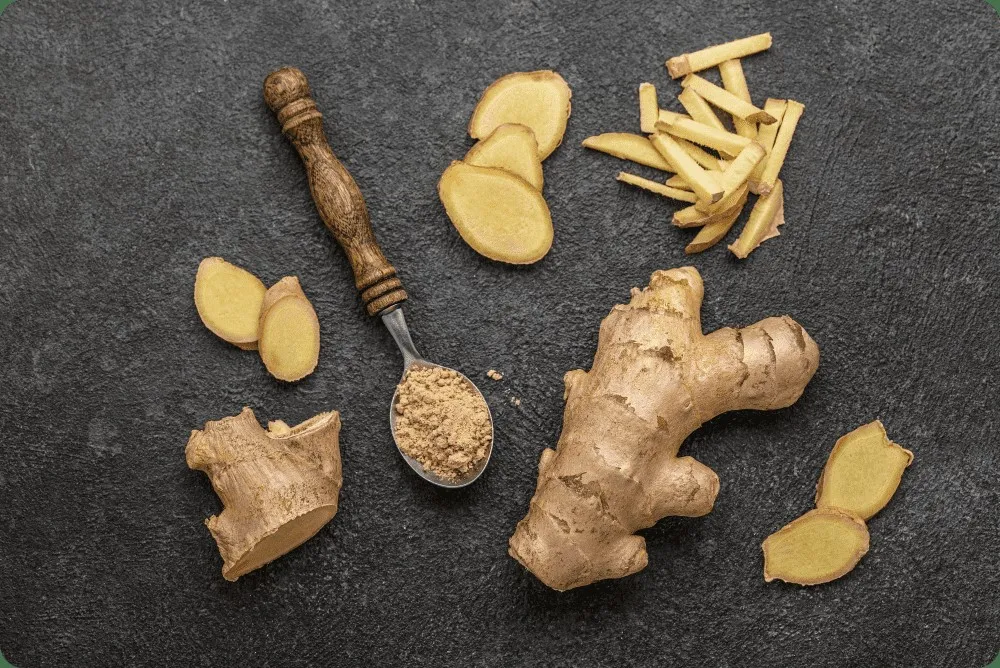
Fresh ginger rhizomes arranged on a wooden table

Ginger is a rhizome used in many food and processing applications, yet the commodity name alone is not enough to begin an international quotation enquiry. A buyer should describe the ginger form sought, intended use, how the goods will be assessed, indicative volume, and destination country. Without that foundation, two replies that both mention ginger may in fact address different requirements.

For a buyer looking for ginger from Indonesia, an orderly first discussion helps separate what is confirmed from what still needs clarification. PT Imexindo Dua Bersaudara is a trading company that discusses commodities against buyer requirements; it is not a plantation owner or ginger producer. This guide covers practical information you can prepare before requesting a quotation.

The purpose is not to set a price, promise availability, or replace an inspection of the goods. It is to make your requirement clear enough to receive and compare useful responses. A structured enquiry also makes it easier for each team member to see which points are agreed and which remain questions for the next discussion.

What should be meant by ginger in an enquiry?

In a trade enquiry, state whether the requirement concerns fresh rhizomes, dried ginger, cut pieces, or another form that is relevant to the discussion. Do not rely on a broad term where the product form affects acceptance in your own operation. A short description of the intended condition gives the responding party a usable basis without requiring it to infer the need from one word.

It is also useful to describe the end use in general terms. This need not reveal a recipe or internal process. Identify the characteristics that matter to your requirement, such as physical condition, consistency, or handling points that need discussion. The following questions can then focus on parameters that are genuinely relevant rather than on assumptions.

Separate mandatory requirements from preferences

An enquiry is easier to review when mandatory requirements are separated from preferences. A mandatory requirement is an element that must be met before the goods can be considered. A preference is an element that may remain open for discussion once lot information or a sample is available. This distinction avoids restarting the whole conversation when only one small element changes.

Record which people in your team will assess each point. A purchasing team may need to compare offers, while a quality team may need to read product information. When both work from one specification version, questions to the trading party become more consistent. Written notes also make it easier to identify which points have been answered and which remain open.

  • State the ginger form and product condition to be discussed.
  • Mark characteristics that are mandatory and preferences that remain open.
  • Explain whether a sample or lot information is needed before a decision.
  • Keep one specification version for everyone assessing quotations.

How can quality be discussed without vague labels?

Terms such as selected or premium are not always understood in the same way by every party. It is more useful to describe what needs to be assessed than to rely only on a grade name. A buyer can state the physical characteristics that matter, the packing format to be discussed, and any internal inspection approach that is available. The party making an offer can then respond to a more defined need.

Photographs can help introduce the condition of goods, but they should not be the only basis for a decision. Where a sample review is needed, record in advance what will be compared with the specification. A sample result should also be understood as discussion material for a particular requirement, not as a promise that every future shipment will match without further review.

Why should packing and indicative volume be stated?

Packing and indicative volume give context to a quotation discussion. You do not need to fix a final quantity in the first message if the requirement is still developing. An indicative need and the packing format to be discussed nevertheless help both parties identify the next questions. If the volume changes, update the written specification so that an earlier response is not mistakenly used as the comparison basis.

The destination country should be included early as well. It helps sequence the discussion of shipment and information that may need review by the relevant parties. There is no single list that automatically applies to every destination or transaction. Treat the destination as context for the conversation rather than a reason to assume requirements that have not been checked.

Create an enquiry that can be compared

A concise enquiry can include the ginger description, required form and condition, mandatory parameters, packing to be discussed, indicative volume, destination country, and open questions. Where there is a comparator sample or an inspection format, introduce it at the appropriate stage. This information does not commit you to a purchase, but it provides a fairer basis for reading more than one response.

If delivery terms will appear in the discussion, ensure that the roles and responsibilities are understood before a term is selected. A trade term is useful only when it is tied to the transaction being discussed. It should not be used as a short label in place of a clear agreement between the parties.

Move from a specification to a clearer discussion

Send the same specification version to each party you are discussing the requirement with. Keep changes to product form, inspection approach, packing, volume, or destination in writing. This simple step helps purchasing, quality, and logistics teams use the same reference when new information arrives. If an answer is incomplete, mark it as an open question rather than treating it as closed.

You can begin by describing the ginger to be discussed, the essential requirements, indicative volume, and destination country. IDB can assess the fit of that enquiry and continue the discussion from the information available. This keeps the conversation practical without making promises about price, stock, or shipping time that have not been confirmed. A clear specification leaves room for clarification before a purchasing decision is made.

Start here

Tell us the commodity,
we will check the route

Three lines are enough on a first message: the commodity, roughly how much, and your destination port. We reply the same working day.

PDFCompany profileCompany profile and commodity list WAWhatsApp our trade deskFor quick questions

Your details are used only to reply to you and are not shared with third parties.

Message us on WhatsApp
WhatsApp