
A tapioca flour enquiry is easier to review when the buyer records product use, assessment points, samples, packing, and destination before discussing a quotation.
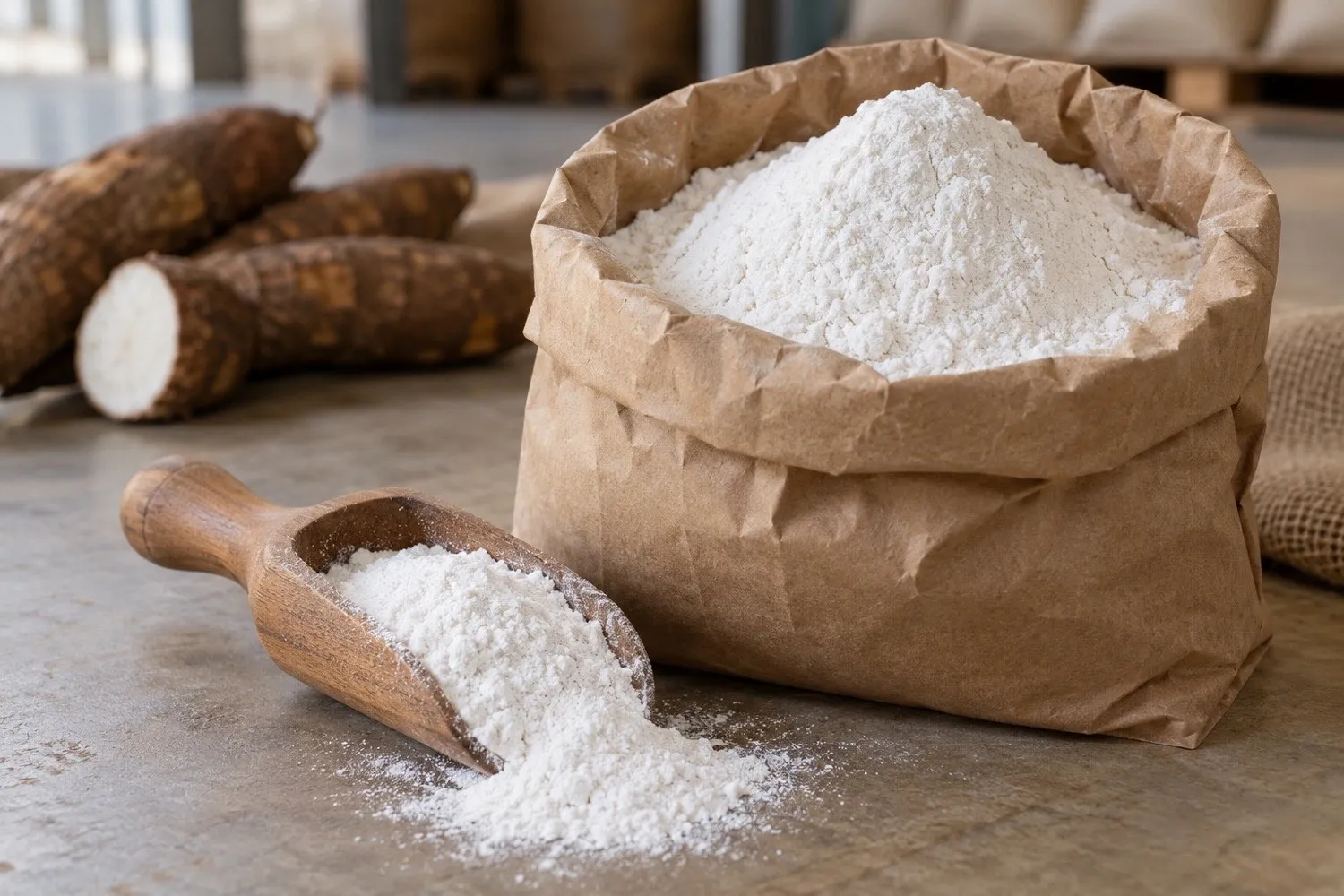
Tapioca flour can look straightforward on a purchasing list. Yet an enquiry that says only "tapioca flour" usually leaves important questions unanswered. Production may be thinking about how the material will be used, quality colleagues may be deciding what to assess, and the warehouse may need to understand packing and receipt. They can all be discussing the same product in different language.
A practical first step is to prepare one short shared note before asking for a quotation. It does not need to resemble a formal document. Its purpose is to show what the buyer already knows, what remains open, and what should be demonstrated through a sample or available lot information. That keeps the discussion away from broad labels and unspoken assumptions.
PT Imexindo Dua Bersaudara is a trading company. This guide concerns the information a buyer can prepare at the start; it is not a promise about an unreviewed lot. When requirements are recorded clearly from the beginning, later assessment is easier for everyone to follow.
Start with the intended use, not only the commodity name
Begin with the context in which your facility expects to use the material. Is it entering an established process, being considered for a trial, or being compared with another material? There is no need to disclose an internal formula. A relevant description of the use is enough to guide questions about product form, consistency, handling, or the information the team needs next.
For example, a buying team might say that it needs a sample for internal assessment and wants to align the review with its quality colleagues. That is much more useful than asking for the "best" product. It creates a clear direction without claiming a result that has not yet been checked.
Turn broad quality language into assessment points
Words such as clean, fine, or consistent can sound shared while meaning different things to different teams. Break the requirement into points that your own process can review. State who will assess a sample and how findings will be recorded. Where the method is not final, simply mark it as a point that still needs agreement.
Photographs and short descriptions can introduce a product, but they are not a substitute for assessment. A list of review points makes feedback more useful: what fits the requirement, what needs another question, and what information is still unavailable. The outcome then does not rely on one person's memory after a sample has moved between colleagues.
- Describe the relevant use in your process.
- Separate mandatory requirements from preferences still open to discussion.
- Record assessment points in language understood by purchasing and quality teams.
- Keep sample findings with the questions that remain unanswered.
Treat a sample as a two-way conversation
A sample is most useful when it has a clear purpose. Before reviewing it, record the product requested, the points to assess, the sample format under discussion, and when your team expects to provide feedback. Once the review is complete, compare the findings with the same note. This small routine prevents a fresh discussion from being built on different assumptions.
A sample is not an automatic conclusion about every future transaction. It is a reference point that gives both parties shared language. If the requirement changes after a trial, update the same note and explain what changed. The buyer can then ask the next question without rebuilding the whole context.
For instance, one colleague may record an initial impression while another reviews the material after an internal process. Using the same list lets them discuss the difference calmly and identify the precise question that still needs an answer.
Include packing and receipt from the outset
Packing affects more than the appearance of the goods. Storage space, unloading arrangements, internal marking requirements, and the receiving process can all shape questions that need answers before quotations are compared. If the packing decision is not yet made, describe it as provisional. Being clear about an open point is more useful than offering a detail that later changes.
Keep packing notes separate from the list of product parameters. This allows the warehouse team to review receiving needs without blending them into quality assessment. One organised summary is also easier to share with people responsible for purchasing, inspection, and logistics.
Give requirement and destination context
An indicative requirement and a destination country or port provide context for a quotation discussion. If the quantity or destination may change, describe it as an indication. The party receiving the enquiry can understand its scope, while your team does not have to present an estimate as a final decision.
Documents and shipping arrangements remain transaction-specific questions. Their final form depends on the goods, destination, and agreement being discussed. Raising these questions early makes it easier to see what needs clarification before quotations are compared, without treating an initial conversation as a settled shipping plan.
Prepare an enquiry colleagues can review
An initial tapioca flour enquiry can include the relevant intended use, the product form under discussion, assessment points, a sample-review plan, contemplated packing, an indicative requirement, and a delivery destination. Add the questions that matter to your team and mark information that is not final. The note need not be long, but everyone involved should be able to read the same context.
Send that record with the questions most important to your team. IDB can review whether the information is complete before a quotation discussion proceeds. If the sample, packing, or destination changes, keep using the same working note and update the relevant part. Decisions can then rest on checkable specifications rather than assumptions passed from one conversation to another.