
For importers and distributors buying Indonesian ginger by the container: choosing fresh or dried, writing the size and condition into the order, sampling, and planning the shipment.
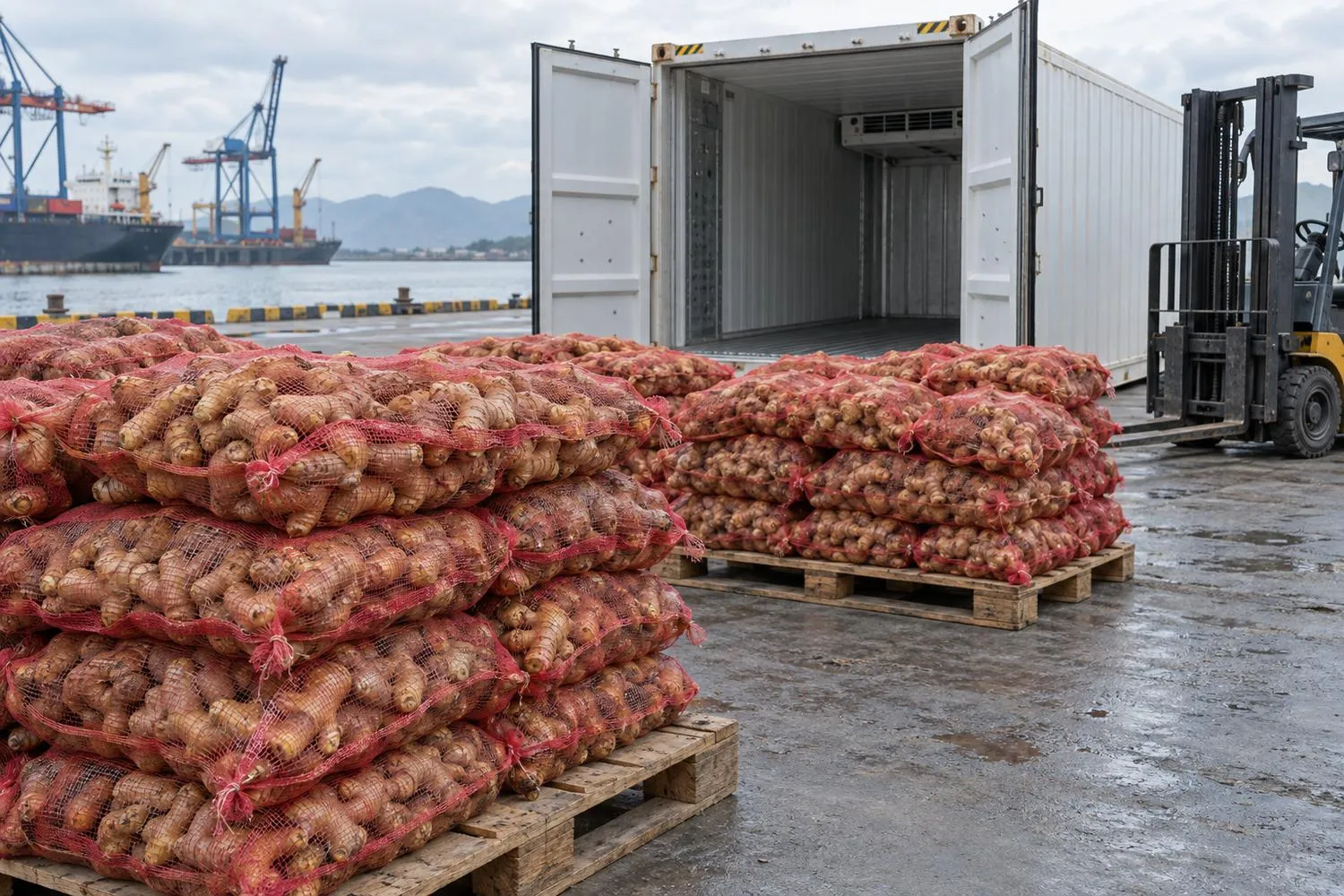
Importing ginger from Indonesia by the container comes down to one early decision and several smaller ones that follow from it. The early decision is the form: fresh rhizomes, whole dried ginger or dried slices. That choice sets the container you book, how much time the goods can spend in transit, the packing, and what your quality team checks on arrival.
This guide is for importers, wholesalers, distributors and processors who buy by the tonne. It walks through the order in the sequence a first shipment usually takes: form, variety and size, sample, terms, then loading and receipt. If you only need a short enquiry template, the earlier note on fresh or dried ginger enquiries covers that. Here the aim is the whole purchase.
Fresh or dried: decide by route and end use
Fresh ginger is a living product. It keeps breathing after harvest, it loses moisture, and if it is held too warm or too damp it can sprout or develop mould. That is why fresh ginger travels in a refrigerated container and needs a tighter sailing schedule. A delay at the port that would hardly matter for dried spice can cost you condition on a fresh load.
Dried ginger, whole or sliced, ships in a standard dry container. On IDB's own catalogue the advice is plain: for distant ports, dried ginger travels more safely and the cost stays predictable. So the question to ask first is not which form is better, but what your customers actually buy.
- Selling to wholesale markets, retailers or food service that want whole rhizomes: fresh.
- Grinding into powder, blending into tea or seasoning, or supplying an extraction plant: dried, usually sliced.
- Unsure, or the destination is a long voyage away: price both, and compare the landed condition risk, not only the unit price.
A distributor in the Gulf serving vegetable markets and a spice grinder in Europe can both write "Indonesian ginger" in an email. They need different offers, different containers and different checks. Saying which one you are saves a round of quotes that cannot be compared.
Name the variety and the size you will accept
In Indonesia ginger is called jahe, and you will meet several local types. Jahe gajah, sometimes called elephant ginger, has large, plump rhizomes and is usually what sits behind a request for large fresh ginger. Jahe emprit is smaller and more fibrous, with a sharper bite. Jahe merah, red ginger, is smaller again and valued for its pungency. Ask the supplier which type the offered lot is, rather than assuming.
IDB sorts ginger by size to order, so the size you write down becomes part of the agreement. For fresh rhizomes, state the size or weight per piece you expect, what counts as acceptable skin condition, and how much broken or damaged material is tolerable. For dried ginger, say whether you want whole pieces or slices, the slice thickness if it matters to your process, and any moisture limit your own customer applies.
If you already buy ginger from another origin, send your current purchasing specification. It is easier to match an existing standard than to invent one in an email thread. Where a point is still open, mark it as a question for the sample stage instead of filling it with a number borrowed from someone else's contract.
Use the sample to approve a lot, not a promise
A sample is only useful if both sides know what it represents. Ask whether it comes from the lot proposed for your container or is a general example of what can be sourced. Record the answer with the sample reference. Otherwise a sample that passes can leave you unsure which goods you have approved.
Fresh ginger samples age quickly, so agree how they will be judged when they arrive: appearance, firmness, size spread, any sign of sprouting or rot. Dried samples can go to a laboratory. IDB can arrange analysis such as moisture, volatile oil or microbiological limits before shipment where your market requires it. Send back a clear decision: accepted, rejected, or accepted with stated changes.
Agree packing, documents and terms together
Ginger from IDB is packed in mesh bags or cartons. Mesh bags let fresh rhizomes breathe and are common for wholesale; cartons suit buyers who repack less or sell to retail chains. Say which you need, the net weight per pack, and any shipping marks or labelling your warehouse expects. If the goods will be relabelled for retail, check the food labelling rules of your country before packing is printed.
Phytosanitary certificates and certificates of origin come as standard on agricultural cargo from IDB. What your own border needs on top of that depends on the product and the country, so ask your customs broker or the relevant authority for the list for ginger in the form you are buying. Share that list with the exporter early and confirm which documents it can provide, and when. This article does not set out a universal import-document list, because there is not one.
IDB quotes FOB, CFR or CIF from Indonesian ports, with the term on the first line of the offer. If you are new to importing from Indonesia, the guide to choosing between FOB and CIF explains who carries freight and insurance under each. For a refrigerated load, also agree who books the reefer, the set temperature, and what happens if the vessel is delayed. Payment is by advance or irrevocable letter of credit, agreed case by case, and for a first shipment a smaller trial volume is often the sensible start.
Plan the container around the form
For spices IDB normally starts at one 20ft container, and its catalogue lists around 20 tonnes as the indicative 20ft load for ginger. Treat that as a starting figure, not a fixed quantity. The real load depends on the form, the packing and, for fresh goods, the airflow a reefer needs around the cargo. Ask for a loading proposal that shows pack count, net weight per pack and total net weight for your chosen form.
Then think about how fast your market can absorb the goods. A full container of fresh ginger has to be sold while it is still in good condition. A full container of dried slices can sit in a warehouse much longer. Your sales pace may decide the shipment size more than the freight rate does.
Keep the shipment traceable to the order
Before loading, ask for confirmation of the lot reference, pack count and weight, and the shipping marks. IDB checks quality before the container is stuffed, takes loading photographs, and shares the container and seal numbers, so both sides look at the same evidence. Pass that information to your broker and receiving team in good time.
On arrival, compare the goods with the approved sample and the contract, and record any discrepancy straight away under the procedure you agreed. With fresh ginger, check temperature records and condition on the day the doors open, not a week later. Keeping sample approval, contract and shipment records together makes any later question easy to trace.
The full sequence, from enquiry and specification through offer, contract, documents and loading, is laid out on the IDB ordering page, and current forms are listed on the Indonesian ginger page.
IDB can help you source fresh or dried ginger from Java and Sumatra and set up a container order, from agreeing the form, size and sample to export documents and loading. Send the form you need, the ginger type if you have a preference, size or slice requirements, estimated volume, packing and destination port through the IDB enquiry form. Mention whether you need a sample first and your target shipment month, and the trade team will come back with a suitable lot and the next steps.