
What to settle before buying Indonesian white pepper by the container: origin, FAQ or ASTA grade, moisture, bulk density, sample and delivery basis.
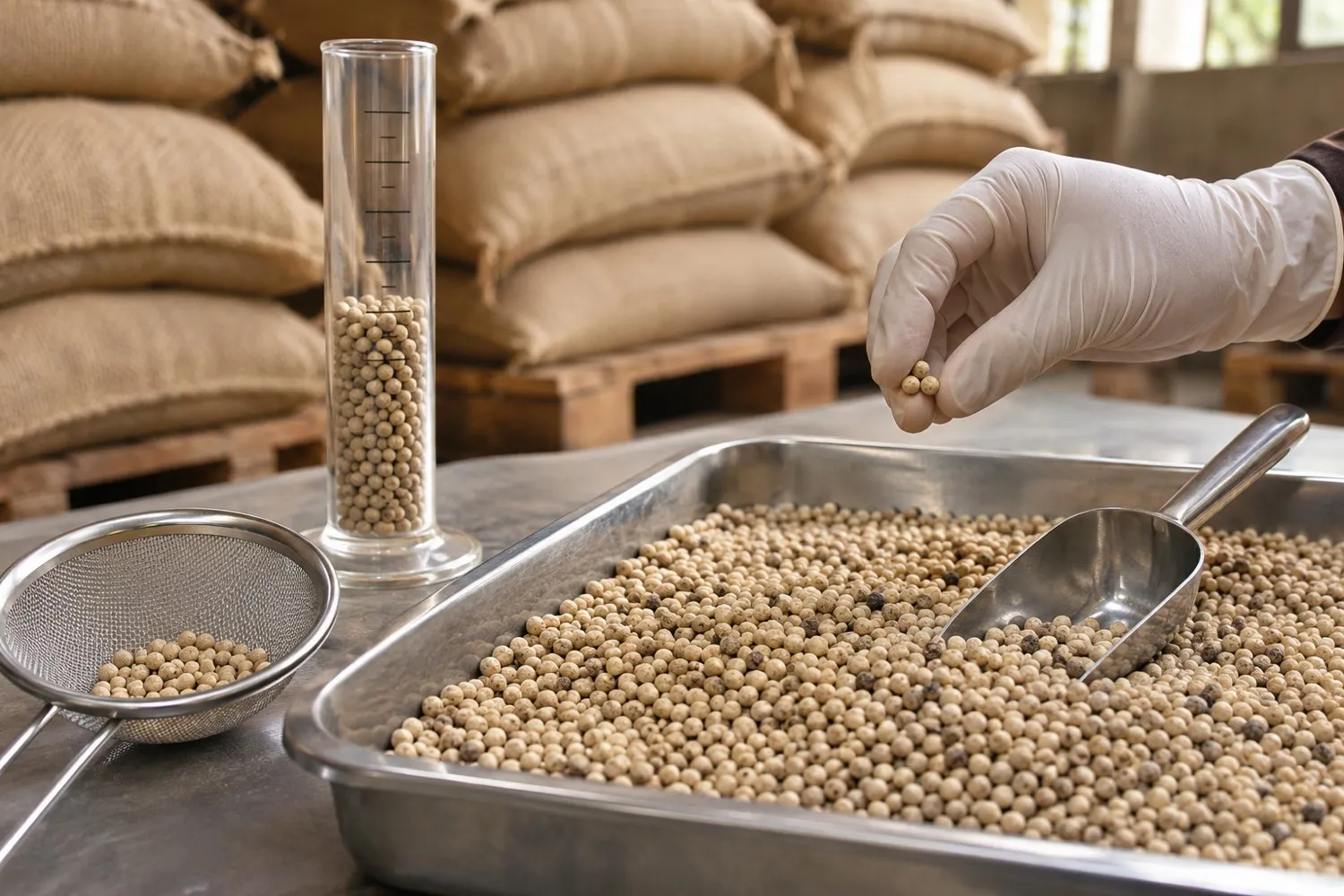
If you are buying white pepper wholesale from Indonesia, the offers you receive will only be comparable once five things are fixed: which origin you are actually asking for, whether you need FAQ or ASTA grade, the moisture and bulk density the goods must meet, which sample the bulk has to match, and the delivery point the price refers to. Two quotes for "Indonesian white pepper" can describe quite different goods until those points are written down.
This guide is for importers, spice traders and grinders who buy by the tonne or by the container. If you want the market background first, our piece on where Indonesia ranks in world white pepper covers it. Here we stay with the practical side: what to settle with a supplier before you sign.
Muntok or Lampung: say which origin you mean
Indonesian white pepper is best known abroad as Muntok white pepper, a name tied to the Bangka Belitung islands, Indonesia's main white pepper growing area. On commodity markets Muntok trades as its own type, separate from Vietnamese white pepper. It is not the only Indonesian origin, though. The white pepper on IDB's commodity page comes from Lampung in southern Sumatra, and European buyers know it for a clean aroma.
Neither origin is automatically the right one. What matters is that your enquiry and your contract use the same name your own customers expect. If a sales contract downstream says Muntok, ask for Muntok and check that the offer says so. If origin is open and you care more about grade, cleanliness and consistency, say that instead, so the supplier can propose what it actually sources rather than guess.
FAQ or ASTA: start from the end use
The grade decision usually follows from what happens to the pepper after it lands. FAQ, fair average quality, is the ordinary trade grade with no special cleaning. It suits industrial buyers who move larger volumes and re-clean or grind in their own plant. ASTA grade, named after the American Spice Trade Association standard, goes through extra cleaning so foreign matter is far lower. It suits buyers who need a cleanliness certificate, which is common for the United States and Europe, and it costs more and takes longer to prepare.
A simple example: a grinder supplying food manufacturers in Germany may need ASTA because its own customers audit cleanliness, while a trader reselling into a market that re-cleans locally may do perfectly well with FAQ and a lower price. Tell the supplier which of these you are. Our short guide to pepper export grades explains the terms in more detail.
Moisture and bulk density are what you inspect
Grade names are a starting point. The figures you can actually check at loading are moisture and bulk density. IDB's reference specification for Lampung white pepper lists 13% maximum moisture. If your market or your quality team needs a tighter limit, write it into the request before anyone quotes, because a figure that is not in the agreed specification is hard to raise after shipment.
Bulk density, stated in grams per litre, tells you how dense and well filled the peppercorns are. For white pepper the usual benchmark is 600 g/l and up, and denser pepper commands a higher price. It is easy to measure: fill a one-litre container with peppercorns and weigh it. That makes it a useful figure to name in the contract and to test on the sample and again before loading.
- Origin: the name your customers expect, such as Muntok or Lampung.
- Grade: FAQ or ASTA, and why.
- Maximum moisture, and when it is tested.
- Minimum bulk density in g/l.
- Any extra limits your own customers require, written as numbers.
Make sure the sample represents the bulk
A sample before contract is normal, and the useful question when it arrives is what it represents. It may come from the lot being offered for your container, or it may simply show the type of pepper the supplier can source. Both are fine, but they support different decisions, so record which one it is alongside the sample reference.
Have your quality team assess the sample against the written specification rather than a general impression. Smell it as well as looking at it: white pepper is made by soaking ripe berries and removing the outer skin, and the way that step is handled shows up in the aroma. If the offer later changes origin or lot, ask whether the approved sample still applies before you go ahead, and agree early whether you want a pre-shipment sample too.
Packing and container planning
IDB packs Lampung white pepper in 25 kg or 50 kg bags, and a 20ft container takes roughly 18 tonnes. Treat that as a planning figure for budgeting and for comparing offers on the same footing, not as a fixed minimum. The actual bag count and net weight for your order are confirmed in the quotation, and a smaller first order or a different bag size is a separate discussion worth raising early.
Put shipping marks, any liner or inner bag requirement and the loading records you expect, such as photographs and the container and seal numbers, into the same request. Agree as well how net weight is measured at loading and how a difference at destination will be handled.
Compare offers on the same delivery basis
An offer for pepper loaded on a vessel in Indonesia and an offer that includes sea freight to your port are not the same price, even if the figures look close. Ask every supplier to quote on the same delivery term and named port, and confirm in writing who pays for freight, insurance and destination charges. IDB quotes one price to the agreed delivery point, and every pepper quotation states the type, grade, bulk density and maximum moisture together with the growing region and an estimated preparation time.
Check how long each offer is valid, since pepper prices move. Then agree the remedy if the cargo misses the specification, the evidence needed to raise a claim, and payment terms, typically an advance payment or a letter of credit. Linking each payment step to something you can verify, such as an approved sample or a loading report, keeps both sides on firm ground. Export documents are arranged before the goods move.
Getting a quotation
IDB can help you source Lampung white pepper and prepare a container order, from agreeing grade and sample to packing, export documents and loading. Send the origin you need, FAQ or ASTA, your moisture and bulk density requirements, estimated volume and destination port through the IDB enquiry form. The trade team will come back with a suitable lot and the next steps for your order.
Sourcing white pepper? Specifications, packing and container loads are on our Indonesian white pepper supplier page.