
For spice importers, grinders and distributors buying Indonesian cassia by the container: what the KA, KB and KC grades mean, which cut suits your use, and what to put in the specification.
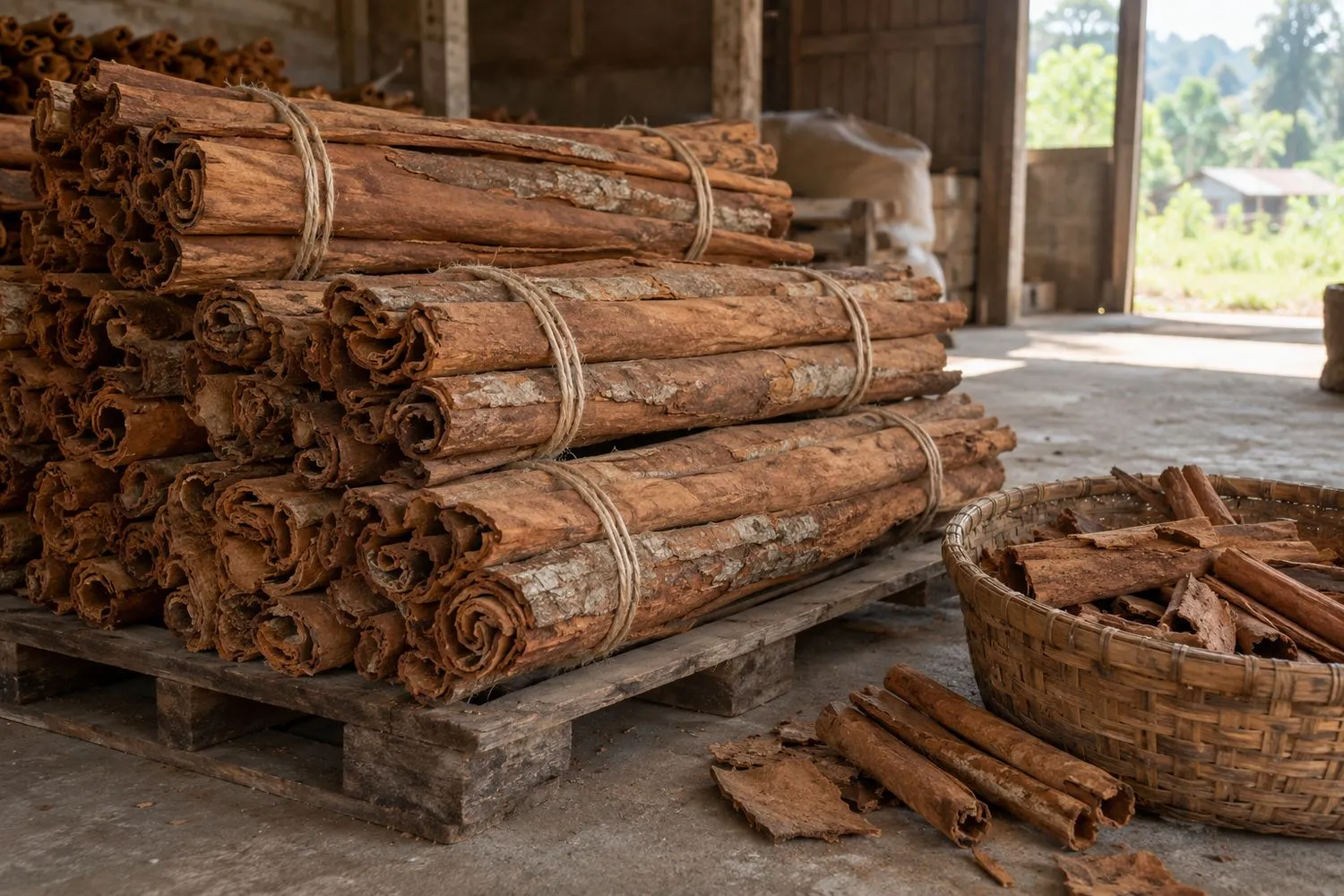
Much of the cinnamon sold in North America is not true cinnamon at all. It is cassia, and Indonesia is one of its main sources. Most Indonesian cassia comes from one highland district in Sumatra: Kerinci, in Jambi province. Buyers know it as Korintje cassia or cassia vera.
If you are sourcing it by the container, the question that decides your price and your product is the grade. Indonesian cassia is traded in three: KA, KB and KC. This guide explains what separates them, which one fits whole-spice packing or grinding, and what to write down before you ask a supplier for an offer.
Korintje cassia is not Ceylon cinnamon
It helps to settle the naming first, because enquiries often mix the two. Ceylon cinnamon comes mainly from Sri Lanka. Its bark is thin and papery and rolls into soft, layered quills. Indonesian cassia comes from a different tree. The bark is thicker and harder, it rolls into a single hollow tube, and the flavour is stronger and sweeter, which is why bakers and grinders in many markets prefer it.
Cassia also contains more coumarin than Ceylon cinnamon. Some markets set limits on coumarin in certain foods, so if your end product is food or a supplement, check the rules that apply in your country before you settle on a specification. Your customs broker, food safety consultant or the relevant authority can confirm what applies, and it is better settled before the specification is fixed.
KA, KB and KC: what the grades tell you
The three grades are the common language of the Kerinci trade. On IDB's cinnamon page, KA is described as the top grade: thick bark, clean and well formed. KB and KC are the lower grades, and they mostly go to the powder industry, where the appearance of each stick matters far less than the flavour and the cost per tonne.
In practice, the grade is a judgement about how the bark looks and how it was handled. Buyers looking at a KA lot pay attention to bark thickness, even colour, how intact the tubes are and how little dust and loose debris is mixed in. With KB and KC, more broken pieces and more variation in shape are accepted, because the material will be ground anyway.
Grade descriptions are not identical from one exporter to the next. Two suppliers can both say KA and still ship visibly different bark. That is why a written specification and an approved sample matter more than the grade name on its own.
Match the grade to what you will do with it
The quickest way to choose is to describe where the cassia goes after it reaches your warehouse. A few common cases:
- Retail packing of whole sticks, where the customer sees every piece through the pack: KA, cut to an even length.
- Food service and bakery suppliers who sell sticks by weight and care less about uniform looks: often KA or a better KB lot, depending on your customers.
- Grinding into powder for your own label or for industrial users: KB or KC, where flavour strength and price per tonne matter more than appearance.
- Extraction or flavour manufacturing: the parameters you test for, such as volatile oil, usually decide the lot more than the visual grade.
If you already buy cassia from Indonesia or another origin, send your current purchasing specification with the enquiry. It is the fastest way for a supplier to tell you which Kerinci grade matches it and where it may differ.
Stick length and cut
Kerinci cassia is harvested as long rolls of bark. What you receive depends on how it is cut and sorted after drying. Whole long quills, cut sticks and broken pieces are all traded, and the cut affects both your packing line and the price.
For cut sticks, the length is set to the buyer's request. IDB's reference range runs from 6 to 30 centimetres. A retail packer filling small jars wants a short, consistent stick. A distributor selling to restaurants may prefer longer pieces. State the length you need and the tolerance you can accept, because a lot cut for one market is rarely re-cut for another.
What to write into the specification
For cassia, the specification is the document both sides come back to if something goes wrong. Reference details on the IDB page give a starting point: origin Kerinci, grades KA, KB and KC, moisture at 14% maximum, packed in bales or bags, and around 12 tonnes in a 20ft container. These are reference figures. The grade on offer and the actual load are confirmed in each quotation.
On top of that, a clear cassia specification usually covers:
- Grade and form: KA, KB or KC, as whole quills, cut sticks of a stated length, or broken pieces.
- Moisture limit, and any limits you set for foreign matter, dust and broken material.
- Laboratory parameters your market or customer requires, such as volatile oil or microbiological limits, and whether testing happens before loading.
- Packing and marking: bale or bag, net weight per unit, and any labelling your warehouse needs.
- Volume, destination port and the delivery term you want quoted.
Ask how quality is checked before loading and what record you receive. A sample approved against your written specification, and a loading report that refers back to it, give both sides the same reference point.
Packing, container load and the order itself
Cassia is a light, bulky cargo, so a 20ft container fills by space before it fills by weight. That is why the reference load is around 12 tonnes rather than the higher figures you see for denser spices. Longer quills and cut sticks pack differently from broken pieces, so confirm the expected load for your chosen form in the offer. Our note on working out a container load explains how weight and volume interact.
For spices, orders normally start at one 20ft container. A first order then follows the usual sequence set out in how to order: enquiry, specification, one price against FOB, CFR or CIF, contract and payment, then documents, inspection and loading. On agricultural cargo the phytosanitary certificate and certificate of origin are issued before the cargo moves, and you receive loading photographs with the container and seal numbers before departure.
Compare offers only when they describe the same grade, the same cut, the same packing and the same delivery term. A low KC price for broken bark and a higher KA price for cut sticks tell you little side by side. Prices for cassia move with the harvest, so ask each supplier to state how long the offer is valid.
IDB can help you source KA, KB or KC cassia from Kerinci and set up a container order, from agreeing the grade, cut and sample to export documents and loading. Send the grade and form you need, stick length if any, estimated volume, packing preference and destination port through the IDB enquiry form. The trade team will come back with a suitable lot and the next steps for your order.