
Clove is cengkeh in Bahasa Indonesia. A buyer's glossary of the Indonesian trade names and quote terms you will meet in offers, sample notes and packing lists for spices, fibres and oils.
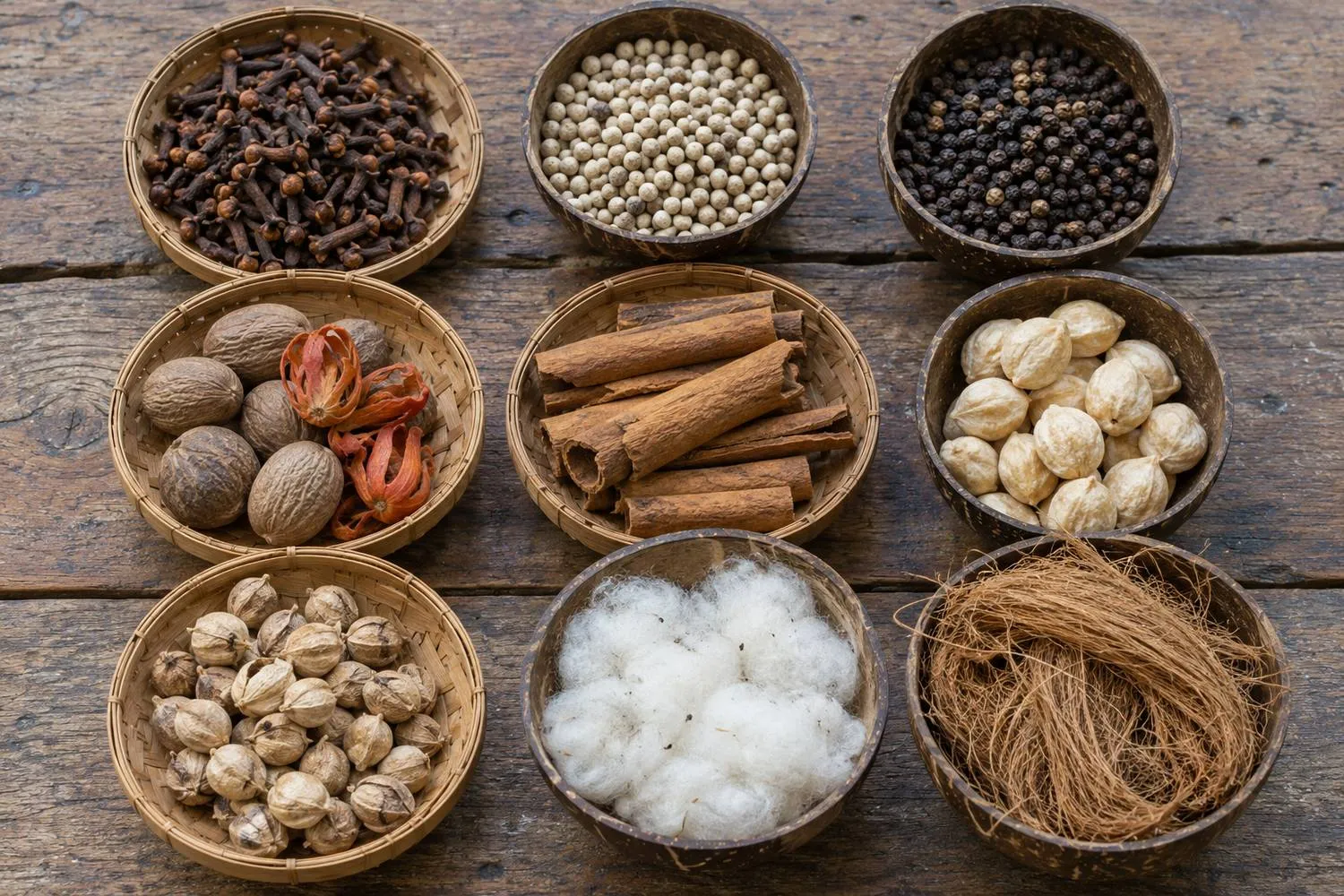
Clove in Bahasa Indonesia is cengkeh, sometimes spelled cengkih, which is the dictionary form. You will see both in supplier messages, and they mean the same thing. That one word is a fair example of why a short glossary helps: Indonesian suppliers often write the local name first, especially in sample notes, warehouse photos and packing lists, and the English name only appears once the offer is formalised.
This guide is for importers, traders and processors who are reading Indonesian quotes for the first time. It maps the commodity names you are most likely to meet to their English trade names, then covers the handful of quality and packing words that turn up in nearly every offer. It is not a translation of every regional name. When a word is unclear, the safest move is to ask for the botanical name and the written specification, and we explain how below.
Spices: the names behind the most common enquiries
Spices are where most first enquiries start, and the names are short and easy to learn. A few of them carry a distinction that matters for what you are actually buying.
- Cengkeh / cengkih: clove. Gagang cengkeh means clove stems, which are sometimes traded separately and are counted as a limit in whole-clove offers.
- Lada or merica: pepper. Lada putih is white pepper and lada hitam is black pepper. Merica is the everyday kitchen word; lada is what you will see in trade.
- Pala: nutmeg. Fuli is mace, the red aril around the seed. An offer for pala "dengan fuli" includes mace; "tanpa fuli" means without.
- Kayu manis: cinnamon, literally "sweet wood". Indonesian kayu manis traded for export is cassia, mainly from Kerinci in Jambi, known abroad as Korintje cassia or cassia vera.
- Kapulaga: cardamom. Indonesian kapulaga lokal is a different plant from Indian green cardamom.
- Kemiri: candlenut, also called kukui nut.
- Jahe: ginger. Kunyit: turmeric.
- Vanili: vanilla. Vanili basah means green, uncured beans.
Two of these deserve a second look before you compare prices. Kayu manis offered as "cinnamon" is almost always cassia, not Ceylon cinnamon, so check which one your customers expect. And kapulaga is not a like-for-like substitute for Indian green cardamom: IDB's cardamom page notes that the local pods differ in both size and aroma, and asks buyers to state the end use so the wrong species is not shipped.
Fibres, oils and other goods
Outside spices, the names are just as direct, but a single Indonesian word can cover several products at different stages of processing.
- Kapuk or kapuk randu: kapok. Randu is the kapok tree itself, so "kapuk randu" simply means kapok from the randu tree. IDB's kapok page covers the fibre from the Pati and Jepara growing areas.
- Sabut kelapa: coconut husk, and by extension coir fibre. Serbuk sabut kelapa is cocopeat, the pith left after the fibre is removed.
- Minyak nilam: patchouli oil. Minyak means oil, so minyak kelapa is coconut oil.
- Kopra: copra, the dried coconut meat that RBD coconut oil is made from. Kelapa butir means whole coconuts.
- Briket kelapa or briket arang kelapa: coconut shell charcoal briquettes.
- Kopi: coffee. Biji kakao: cocoa beans.
- Rumput laut: seaweed, literally "sea grass". Export lots are usually named by species, for example Eucheuma cottonii.
- Kerupuk ikan: fish crackers. Tepung tapioka: tapioca flour.
Quality words you will see in an offer
Once the commodity name is clear, the next layer is the quality vocabulary. These words appear in specification tables, sample reports and the short notes suppliers attach to photos. Learning a dozen of them covers most of what you will read.
- Mutu: grade or quality. "Mutu ekspor" is export grade, a broad label that still needs a written specification behind it.
- Kadar air: moisture content. "Kadar air maks 12%" means 12% maximum.
- Kadar gagang: stem content, used for cloves.
- Benda asing: foreign matter, such as sand, dust or plant debris.
- Berat jenis: bulk density, the grams per litre figure black pepper is usually priced against.
- Kering means dried, basah means fresh or wet, kupas means shelled or peeled, and utuh means whole.
- Butir pecah: broken kernels or berries, counted in candlenut and other whole-product offers.
- Sortasi: sorting, often by size or to remove defects.
- Asalan: ungraded goods, roughly as collected from farmers before sorting.
Asalan is the one to watch. A low offer for "kopi asalan" or "cengkeh asalan" is not comparable with an offer for sorted, graded goods, even if the commodity name is identical. If an offer does not say whether goods are asalan or sorted, ask.
Some grade names stay as they are in both languages. Nutmeg is traded as ABCD or sempra, Kerinci cassia as KA, KB and KC, and white pepper is often described as FAQ or ASTA grade. A supplier should be able to explain what each grade means for the lot on offer, rather than leaving it as a code.
Packing and quantity terms on a packing list
Packing lists and loading notes use a small set of words that are easy to misread if you are skimming.
- Karung: bag or sack, such as "karung 50 kg". Karung goni is a jute sack.
- Bal: bale, used for kapok, coir fibre and seaweed. "Dibal" means baled.
- Drum is the same in both languages and is common for patchouli and coconut oil.
- Muatan 20 kaki: a 20ft container load. "Kaki" means feet.
- Netto and bruto: net and gross weight.
- Maks and min: maximum and minimum.
When the name is not enough
Local names vary by region, and the same word can cover more than one plant or grade. Kayu manis and kapulaga are the clearest examples, but they are not the only ones. Rather than relying on the name, ask the supplier to put three things in writing: the botanical name of the goods, the specification the offer is written against, and whether the sample sent represents the lot being offered or only the type of goods available.
Botanical names remove most of the doubt. Clove is Syzygium aromaticum, nutmeg and mace come from Myristica fragrans, Korintje cassia is Cinnamomum burmannii, candlenut is Aleurites moluccanus, kapok comes from Ceiba pentandra and patchouli from Pogostemon cablin. Indonesian local cardamom is usually Amomum compactum, while Indian green cardamom is Elettaria cardamomum. If those names match your purchasing standard, the rest of the conversation can focus on grade and volume.
For cloves, for example, IDB's clove page gives reference figures for Sulawesi and Maluku goods: moisture 12% max, stems 5% max, 50 kg bags. When an offer uses the Indonesian terms kadar air and kadar gagang, those are the two numbers it is talking about. Our guide to choosing an Indonesian commodity supplier covers the wider checks worth making before you commit.
Getting a clear offer from IDB
IDB trades Indonesian commodities to buyers abroad, so we read these terms on both sides of the deal every day. If you are sourcing any of the goods above, we can help you match the Indonesian name to the product you actually need, pin down the grade and prepare a container order. Send the commodity, the specification or end use, your expected volume and the destination port, and we will tell you what we can supply and on what basis.