
For chocolate makers, cocoa processors and traders buying Sulawesi cocoa by the container: choosing fermented or unfermented beans, the specification points that matter, the sample, terms, documents and loading.
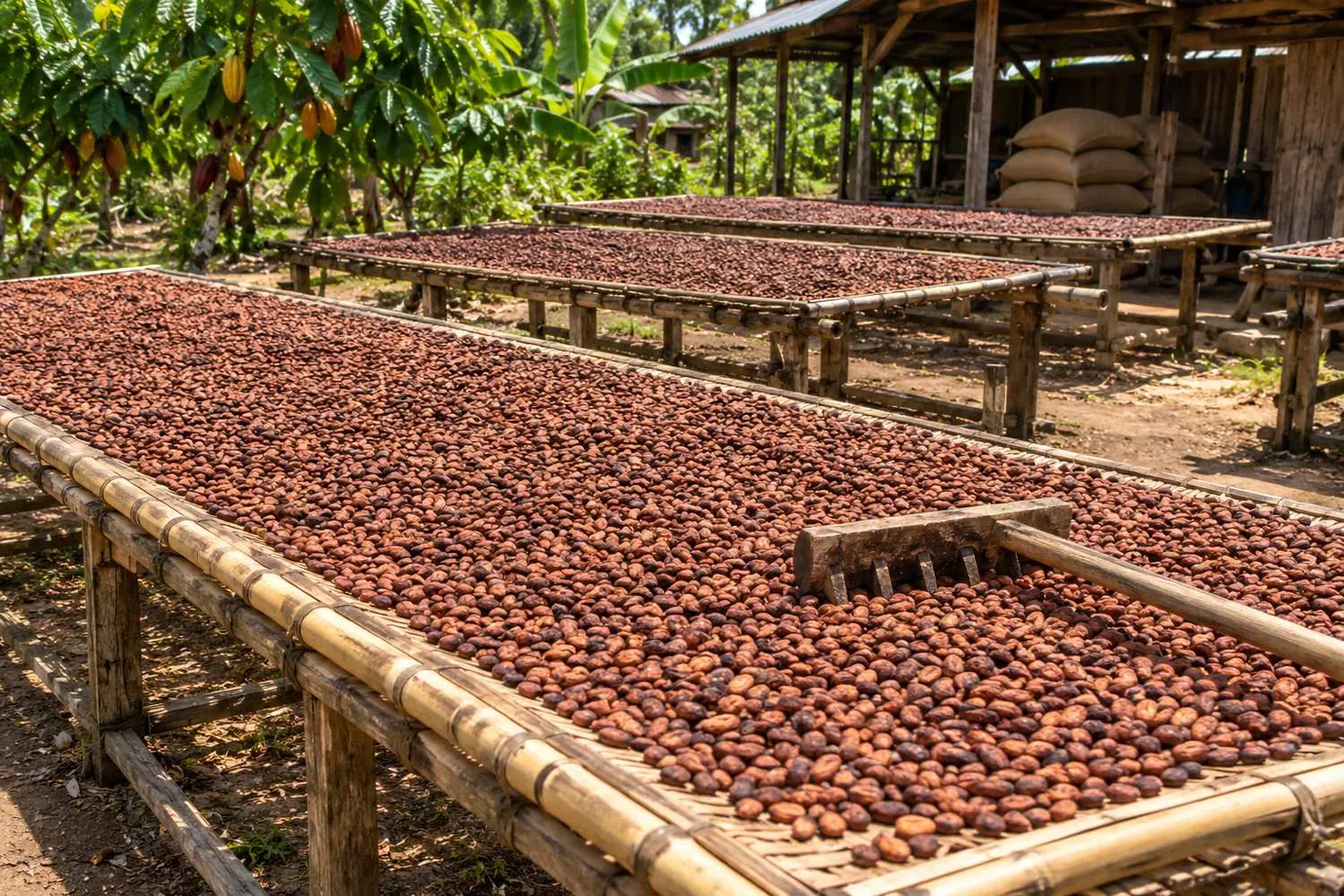
The first decision when you import cocoa beans from Indonesia is not the port or the price. It is whether you need fermented or unfermented beans. The two come from the same trees in Sulawesi, but they go to different factories, sell at different prices and are judged by different standards. Get that choice right, write a short specification around it, and a first container order follows a fairly predictable path.
This guide is for chocolate manufacturers, cocoa grinders, butter and powder processors, and the traders who supply them. It follows the order a first purchase usually takes: what you are buying, the specification, the sample, terms and documents, and the check before loading.
Where Indonesian cocoa comes from
Most of the cocoa IDB trades comes from Sulawesi, which is also a source of the cloves and coffee on our list. Much of it is grown on small family farms. The harvest is spread over several months, and the beans are usually dried on the farm or in the village and gathered by collectors before they reach an exporter's warehouse. In supplier messages you may see the Indonesian name biji kakao, which simply means cocoa beans.
That chain matters to you as a buyer. A container is usually built from many smaller lots, so consistency comes from how the beans are sorted, dried and checked at the warehouse, not from a single farm. Ask how a lot is assembled and checked before you compare offers that look identical on paper.
Fermented or unfermented: which one fits your factory
Fermentation is where much of chocolate flavour begins. The International Cocoa Organization describes how the wet beans ferment on the farm, usually for somewhere between 36 and 72 hours, before drying. Beans that skip this step can still be dried and sold, but they will not develop the same flavour when roasted.
In practice the split is simple. Fermented beans carry a higher price and go mainly to chocolate manufacturers, who need the flavour. Unfermented beans generally go to the cocoa butter industry, where fat is the main product and flavour matters less. If you make chocolate, ask for fermented beans and say how you will judge the fermentation. If you press butter, unfermented beans may be the better value, and saying so up front keeps you from paying for a step you do not need.
There is a second distinction you will hear: bulk cocoa and fine flavour cocoa. ICCO uses these terms for two broad markets, separated by flavour rather than by other quality factors. If you are buying for a premium chocolate line, say so, because the supplier then knows to look for lots selected on flavour, not only on physical grade.
The specification points that matter
A cocoa specification does not need to be long. It needs to cover the points your production line depends on:
- Type: fermented or unfermented, and bulk or a flavour-selected lot if that applies.
- Moisture: IDB works to a maximum of 7.5 per cent, the level ICCO describes as suitable for secure storage in the tropics.
- Fermentation and defects: how you will judge them, usually by a cut test that opens a set number of beans to check colour, mould and insect damage.
- Bean size, often expressed as a bean count per 100 grams, if your roasting or grinding line is sensitive to it.
- Foreign matter: limits on stones, shell pieces, flat beans and other material.
- Packing: IDB's standard is 60 kilogram jute bags.
If your quality team already uses a purchasing specification for cocoa from another origin, send it. Matching a standard your team trusts is faster than agreeing a new one by email. The quality information buyers need first goes further into describing bean condition and quality checks in your enquiry.
Ask for a sample that represents your lot
A sample is only useful if everyone knows what it stands for. When it arrives, ask whether it was drawn from the lot proposed for your container or is a general example of what can be sourced. Both are fine, as long as the label says which.
Run the same tests on the sample that you will apply to the shipment: the cut test, moisture and bean count. If you make chocolate, roast a small batch and have the people who taste your product judge it, not only purchasing. Then reply with a plain decision: accepted, rejected, or accepted with stated changes. That decision becomes the reference the shipment is checked against, so keep the result and the sample reference together.
Terms, payment and documents
Ask for every offer on a named Incoterm. IDB quotes FOB, CFR or CIF from Indonesian ports and puts the Incoterm on the first line, so competing quotes are easy to compare. Payment is usually an advance or a letter of credit. The sales contract records the type, specification, quantity, packing, schedule and what happens if the cargo arrives outside the agreed figures. The general sequence is set out on how to order.
A phytosanitary certificate and a certificate of origin come as standard on agricultural cargo. Your own market may ask for more, such as a fumigation record, a laboratory result or information that traces the beans back to the growing area. Check with your customs broker or import authority and say what you need before contract, while it can still be arranged before shipment.
Loading a cocoa container
Cocoa beans are dense compared with fibre cargo, so a container fills by weight rather than by space. A 20ft container takes around 17 tonnes of beans in 60 kilogram bags. The exact figure depends on stowage and the weight limits for your route, so ask for an estimated load before you compare offers.
Moisture belongs in this part of the conversation too. Beans that leave the warehouse too damp can grow mould on a long voyage inside a closed box, which is why the moisture limit sits in the contract and not only on the offer. Before the bags go into the container, IDB checks quality, seals the container with the inspector present, and sends loading photographs, a quality report and the container and seal numbers. Read that report against your approved sample and raise anything unclear before the vessel sails.
Planning a cocoa order with IDB
IDB can help you source fermented or unfermented cocoa beans from Sulawesi and set up a container order, from agreeing the specification and sample to packing, export documents and loading. Send the type you need, your moisture and cut test limits, estimated volume and destination port through the IDB enquiry form. The product details are on our cocoa beans page, and the trade team will come back with a suitable lot and the next steps for your order.
Sources: ICCO on cocoa processing and ICCO on fine flavour and bulk cocoa.