
What importers specify when buying Indonesian coconut coir fibre by the container: fibre length, dust, moisture, pressed bales and how much fits in a 20ft.
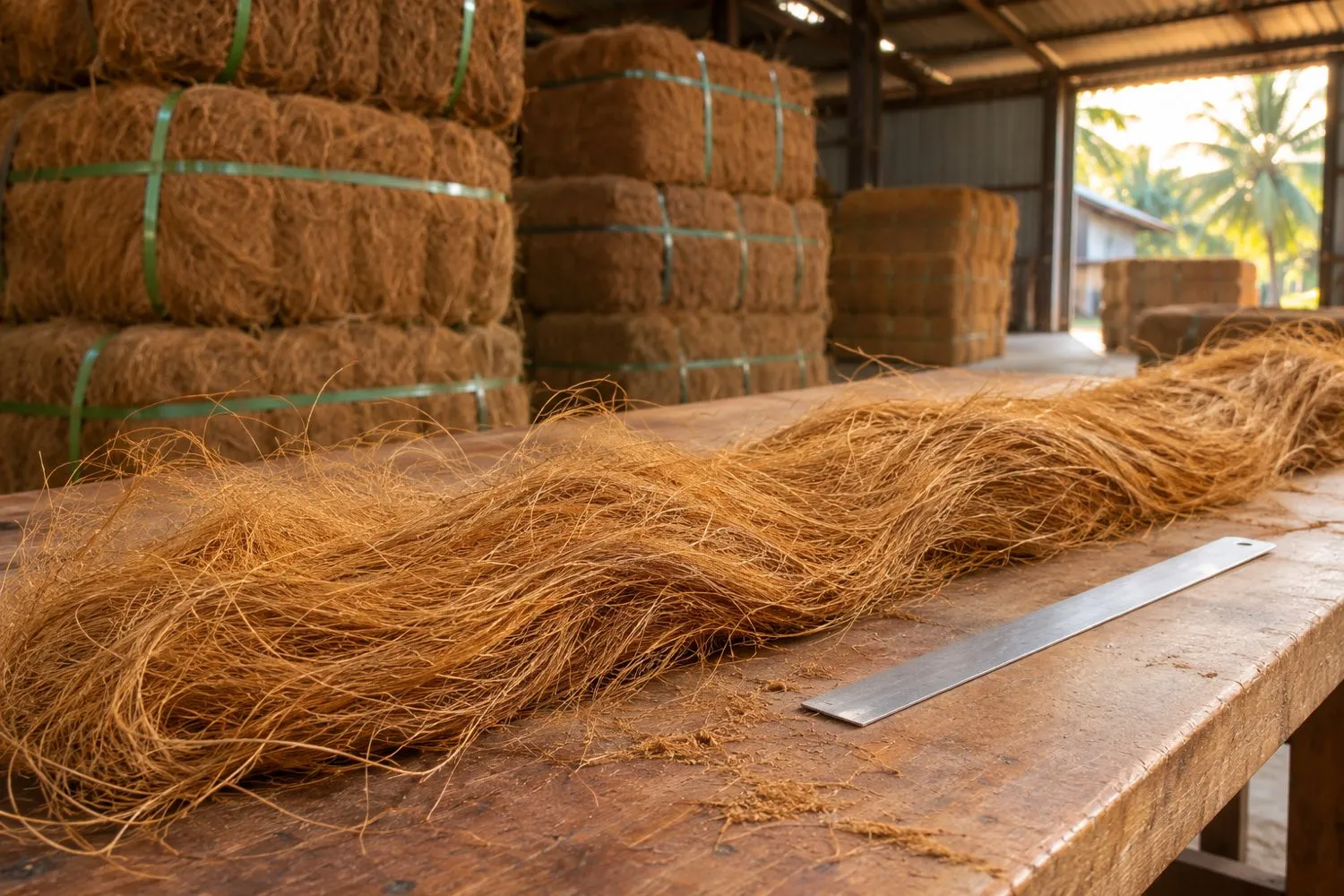
If you buy coconut fibre in bulk from Indonesia, two figures will shape almost every conversation with a supplier: how long the fibre is, and how much dust and short fibre come with it. Together they decide what your line can do with the material, whether it is needle-felted into mattress pads, spun into twine, rubberised for seating or mixed into a growing medium. Moisture and bale format come next. Then there is the container arithmetic, which catches out most first-time coir buyers.
This guide is for mattress and upholstery manufacturers, rope and geotextile producers, horticultural mixers and the traders who supply them. It covers what to put in the specification, how to judge a sample, how the cargo is packed and loaded, and what to settle before the first shipment.
Fibre, not pith: say which one you are buying
Coconut fibre, also sold as coir or coco fibre, is the long strand pulled from the husk. The fine, spongy material left behind is coir pith, which is sold as cocopeat. Many Indonesian husk processors produce both from the same husks, so an enquiry that only says "coco" can come back priced for the wrong product. If your mill needs fibre, say fibre. If you are after pith in compressed blocks, our guide to buying cocopeat in bulk covers that product, where salt content rather than fibre length sets the grade.
IDB sources coir fibre from processors in Java and Sumatra, including the Pati area of Central Java, and ships it as long fibre in pressed bales. The coconut fibre page lists the base specification. As a trading company, we agree the specification with you first and then check the processor's lot against it.
Fibre length: write down the number your process needs
Length is the first thing a buyer looks at and the easiest thing to argue about later. A needle-felting line for mattress pads can usually take a broader mix of lengths than a twine spinner, who needs strands long enough to twist. Brush makers want the stiffer strands. Offers described simply as "long fibre" can mean quite different material from one processor to the next, so state your own minimum length, the share of short fibre you will accept, and how you measure it.
A simple method agreed in advance saves a lot of email. For example, pull a fixed weight of fibre from several bales, sort it by hand into strands above and below your minimum, and weigh the two piles. Whatever method you use, write it into the specification. The sample, the check before loading and your own goods-in inspection should all be measuring the same thing.
Dust and short fibre
IDB's commodity notes name fibre length and dust content as the two figures buyers ask about most, and both appear on the offer for that reason. Dust here means the fine pith particles and broken fibre still clinging to the strands after extraction. Some is normal. Too much, and a felting line clogs, a spinning line breaks threads, and you pay freight on material that ends up swept off the floor.
The same husks can give a cleaner or a dustier fibre depending on how thoroughly it is screened after extraction. Cleaner fibre takes more work at the processor, which is one reason two offers for "coir fibre in bales" can sit at different prices. Ask what screening the lot has had, and put the limits you need in one list:
- Fibre type: long fibre, or a stated mix, and what it will be used for.
- Minimum length and the accepted share of short fibre, with the measuring method.
- Maximum dust and foreign matter such as husk pieces, sand or plastic.
- Moisture at packing. IDB's base specification is 15 per cent maximum.
- Colour, if the fibre shows in your product or your customers expect a steady shade.
- Bale weight, strapping and any marks your warehouse needs.
If you already buy coir from another origin, send that purchasing specification. Matching a standard your quality team already trusts is quicker than drafting a new one by email.
Moisture, and why the bales should travel dry
Moisture matters for two reasons. Wet fibre adds weight that you pay for, and damp bales shut inside a steel box on a long voyage can heat, smell and grow mould before they reach your warehouse. IDB's base figure is 15 per cent at most. If your process or your market needs a tighter limit, write it down together with the test method, because readings taken by different methods do not compare directly.
Pressed bales and how much fits in a container
For export, coir is pressed into bales and strapped. IDB's standard is the 110 kilogram pressed bale. Pressing matters because coir is bulky. A 20ft container holds about 33 cubic metres and can carry up to roughly 28 tonnes, but fibre fills the space long before it comes near that weight.
IDB's reference load for coir fibre in a 20ft is around 5 tonnes, which is about 45 bales of 110 kilograms. Treat it as a planning figure, since bale density and stowage move it up or down. Compare that with cocopeat, where dense 5 kilogram blocks take a 20ft to around 11 tonnes, and you can see why two products from the same husk ship so differently.
Freight is charged per container, so for a light cargo the tonnes you get into each box drive your landed cost per kilogram. Before comparing offers, ask each supplier for the estimated load in tonnes and in bales for the bale size it quotes, and whether a 40ft high cube suits your volume better than a 20ft.
Approve a sample, then hold the lot to it
Ask for a sample before you sign, and ask which lot it comes from. A few kilograms pulled from the bales proposed for your container tell you far more than a neat showcase bundle. When it arrives, run the checks you will use on the bulk: sort for length, shake out a handful to see the dust, and measure moisture your own way.
Then answer in writing. Approved as it is, approved with named changes, or not approved and why. That reply becomes the reference the shipment is checked against, and it should be quoted in the contract so nobody has to rely on memory if a question comes up on arrival.
Terms, documents and the check before loading
Ask for every offer on a named Incoterm. IDB quotes FOB, CFR or CIF from Indonesian ports and puts the Incoterm on the first line, so competing offers line up. Payment is an advance or an irrevocable letter of credit, agreed case by case, and for a first shipment a smaller trial volume is often the sensible start. The contract should carry the specification, the approved sample reference, the quantity and what happens if the cargo arrives outside the agreed figures. The full sequence is set out on how to order.
A phytosanitary certificate and a certificate of origin come as standard on agricultural cargo. Plant fibre can face specific entry conditions in some importing countries, so ask your customs broker or plant health authority what your market requires, and raise it before contract while any extra treatment or document can still be arranged.
Before the bales go in, IDB checks quality, seals the container with the inspector present, and sends you loading photographs, the quality report and the container and seal numbers. Read that report against your approved sample before the vessel sails.
Planning a coir fibre order with IDB
IDB can help you source coconut fibre from Java and Sumatra and set up a container order, from agreeing length, dust and moisture limits to the sample, bale format, export documents and loading. Send your end use, the fibre specification you work to, your estimated volume and the destination port through the IDB enquiry form, and the trade team will come back with a suitable lot and the next steps for your order.
Sourcing coco fiber? Specifications, packing and container loads are on our Indonesian coco fiber supplier page.