
What importers settle when buying Indonesian nutmeg by the container: ABCD, SS or BWP grade, aflatoxin testing for the EU, moisture, mace, bag size and a 20ft load.
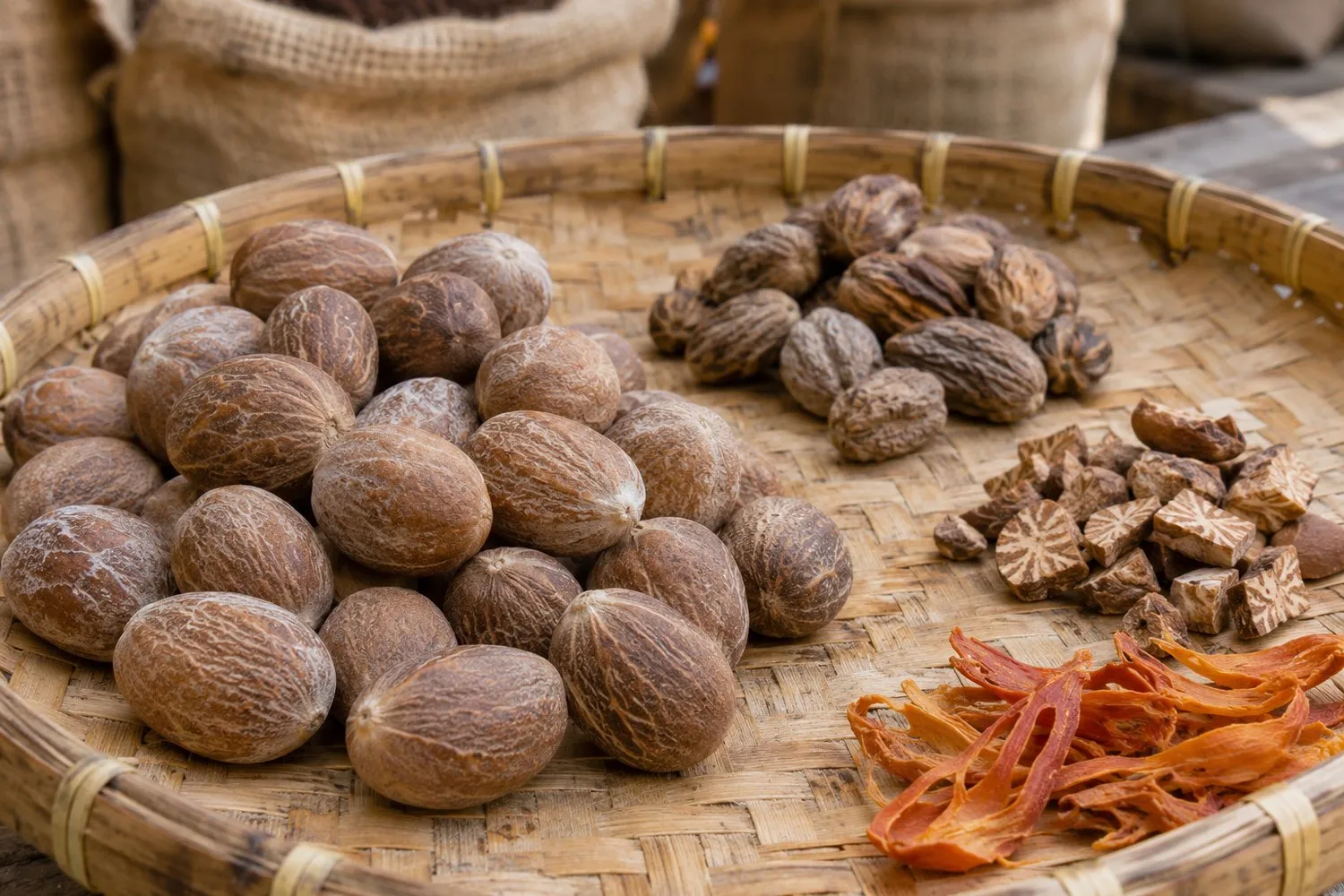
Nutmeg is one of the few spices where the grade name tells you almost everything about where the goods will end up. Whole ABCD kernels go to retail jars and food service, shrivelled SS kernels go to the grinder, and broken lots go to oil distillers. Buy the wrong grade for your use and you either overpay for looks nobody sees or end up with kernels you cannot sell whole.
Indonesia is the obvious place to buy. According to CBI, the Dutch government's import promotion centre, Indonesia supplies about 79% of the nutmeg Europe imports. That same position makes Indonesian nutmeg the most closely watched origin at European borders, mostly because of aflatoxin. This guide is for importers, grinders and oil processors buying by the tonne or the container, and covers the points to fix with a supplier before you sign.
ABCD, SS or BWP: choose the grade from your end use
Indonesian nutmeg is sorted after the shells are cracked, and the trade uses three main grade names. CBI's 2024 market guide describes them like this:
- ABCD: the top grade. Sound, good-looking whole kernels, often sold by count per kilogram, and the bigger the kernel the higher the price. Used for whole nutmeg in retail and food service.
- SS (Sound Shrivelled): the middle grade. Kernels are sound but wrinkled, and a lot can include some broken pieces. Used mainly for grinding into powder.
- BWP (Broken, Wormed and Punctured): the lowest grade, suitable only for extracting volatile oil.
So a spice packer selling whole nutmeg in jars needs ABCD and should state the count it wants. A grinder supplying ground nutmeg to food manufacturers rarely gains anything from ABCD; SS is the usual choice because the shape disappears in the mill. An oil processor is a different buyer again. IDB's nutmeg from North Maluku is offered in ABCD and in sempra, the grade oil processors usually ask for, so say up front which kind of buyer you are.
Aflatoxin is the check that decides EU shipments
For Europe, mould is the real risk, not appearance. The EU limits for nutmeg are 5 µg/kg for aflatoxin B1 and 10 µg/kg for total aflatoxins (B1, B2, G1 and G2), plus 15 µg/kg for ochratoxin A. CBI counted 44 RASFF alerts for nutmeg between January 2020 and October 2023, all of them linked to mould. When the guide was written, nutmeg from Indonesia was also subject to official aflatoxin checks on 30% of consignments at EU border control. The EU reviews that list regularly, so confirm the current rate with your customs broker before the first shipment.
In practice this means three things for your contract. Agree which laboratory tests the lot and whether the result comes before loading. Agree that the sample drawn for testing comes from the lot that will actually ship. And agree what happens if your own test at destination comes back above the limit. Buyers outside Europe should still ask the question, because other markets may apply their own mycotoxin limits and large food customers often run their own tests.
Grade matters here too. CBI notes that BWP nutmeg without a guarantee of meeting EU aflatoxin limits trades at a steep discount. If you buy a lower grade for oil, say whether the oil itself is going into food, because that changes what you need to test.
Moisture, cleanliness and oil content
Moisture is the simplest figure to fix and the one that protects everything else. Both the Codex standard for nutmeg and the European Spice Association's Quality Minima Document set 10% as the maximum, and IDB's own reference specification for North Maluku nutmeg uses the same 10%. Your customers may want it lower; if so, write the figure into the request before anyone quotes.
The ESA document also allows no foreign objects larger than 2 mm and proposes total extraneous matter below 1% by weight. For grinders and distillers, volatile oil is worth naming as well: CBI cites a minimum of 6.5 ml per 100 g. North Maluku nutmeg is known for a high volatile oil content, but a figure your laboratory can measure is more useful in a contract than a reputation.
- Grade: ABCD, SS or the lower grade for oil, and the end use.
- For ABCD: the count per kilogram you sell to.
- Maximum moisture, and when it is measured.
- Aflatoxin and ochratoxin limits, laboratory and timing of the test.
- Foreign matter limits and, where relevant, minimum volatile oil.
With or without mace
Mace is the red lacy covering around the nutmeg shell, and it comes from the same tree at the same harvest. Indonesian suppliers can ship nutmeg on its own or with mace, and IDB offers both. If you want mace, treat it as a second line in the specification with its own grade, moisture and packing, rather than an extra added to the nutmeg order. If you do not need it, say so, so the quotation is for nutmeg only.
Samples that represent the lot
Ask for a sample before contract and record what it represents: the actual lot offered for your container, or a typical example of the grade. Both are normal, but only the first one tells you what you will receive. For ABCD, count the kernels in a kilogram yourself and look at how even the sizes are. For SS, look at how much broken material is mixed in. For any grade going to Europe, send the sample to the laboratory you will use for the shipment, so the first aflatoxin result comes from the same method as the later ones.
If the offer later moves to a different lot or a different collecting area, ask whether the approved sample still applies, and agree early whether you want a pre-shipment sample as well.
Bags, pallets and a 20ft load
IDB packs nutmeg in 40 kg bags, and a 20ft container takes roughly 15 tonnes. Use that as a planning figure for budgeting and comparing offers, not as a fixed minimum; our note on why suppliers quote by the container explains how a first order is usually sized.
European warehouses often work differently. CBI notes that bulk nutmeg for Europe commonly moves in multi-wall laminated bags of 12.5 kg or 25 kg, sized to standard pallets, and that some countries limit how much a worker may lift, which pushes buyers towards bags under 20 kg. If your warehouse needs a particular bag size, liner or pallet format, put it in the first request. It changes the container count and the packing cost, so it belongs in the quotation rather than in a message after the contract.
Compare offers on the same delivery basis
A price for nutmeg loaded on a vessel in Indonesia and a price that includes freight to your port are not comparable, even when the figures look close. Ask every supplier to quote on the same Incoterm and named port; our guide to FOB or CIF covers the difference. Then check how long each offer is valid, how the net weight is measured at loading, and what remedy applies if the cargo misses the agreed specification or the aflatoxin limit. Link each payment step to something you can verify, such as an approved sample, a laboratory result or a loading report.
Getting a quotation
IDB can help you source nutmeg from North Maluku and prepare a container order, from agreeing grade, moisture and testing to the sample, bag size, export documents and loading. Send the grade and end use, whether you need mace, your moisture and aflatoxin requirements, estimated volume and destination port through the IDB enquiry form. Our nutmeg commodity page lists the starting specification, and the trade team will come back with a suitable lot and the next steps for your order.
Sourcing nutmeg? Specifications, packing and container loads are on our Indonesian nutmeg supplier page.